Liz came and brought me a Wild Bean coffee - it was nice to see her and talk about things, but Wild Bean proved to be exactly what I thought: false advertising. If anyone viewed it as some kind of real coffee, I'd eat my hat. It has all the excitement of coffee that's poured out of a machine: in other words it's coffee for people whose taste buds have gone down the tubes. Which doesn't say much for that chap in the ad who gives up a good-looking girlfriend for a cup of Wild Bean, or wakes with horror from a delicious dream of a luscious lady offering him a morning coffee because it isn't Wild Bean. The guy needs his head read!
It's noteworthy that BP writes about their Wild Bean outlets: "Customers do not expect to find high quality café outlets in a Petrol Station." That's right, they don't. Could anyone expect to find decent coffee at a petrol station, where, these days, they often can't even be bothered to come out and pour your petrol for you...
Monday, October 02, 2006

Sunday, October 01, 2006
Other people's books
I once visited...Anthony Powell, who actually wrote a novel called Books Do Furnish a Room. Indeed, they did so in his case. He lived deep in the English countryside, in Somerset, in an old stone manor  on many green acres. We had tea in his sitting room, which had floor-to-ceiling shelves on every wall. There were first editions by his good friend Evelyn Waugh, and countless volumes culled from his decades as a reviewer. "I can't give a book up, if it's a book that meant something to me," he said. "I always imagine I'll go back to it one day. I rarely do, but the intention is there, and I get a warm feeling among my books." I wished I could have spent days wandering in that house, as he had books in nearly every room.
From an article by Jay Parini entitled: Other People's Books.
I have given up a number of books that I thought I never would, because I was sure I'd read them one day, but I understand Powell's feeling. Having read a book you have a link with it that won't go away - even the awful books that you know were badly written and which you only read because you had to review them or because someone else thought they were wonderful. And so you keep them, thinking that one day you'll need to look something up in them, or check the title, or make a note to read something else by the same author.
I have a great deal of trouble not buying copies of many of the books I borrow from the library. Having established the link with them, I want them to stay close at hand, not be on the shelves at the library where someone else might take them out just when I need them.
 on many green acres. We had tea in his sitting room, which had floor-to-ceiling shelves on every wall. There were first editions by his good friend Evelyn Waugh, and countless volumes culled from his decades as a reviewer. "I can't give a book up, if it's a book that meant something to me," he said. "I always imagine I'll go back to it one day. I rarely do, but the intention is there, and I get a warm feeling among my books." I wished I could have spent days wandering in that house, as he had books in nearly every room.
From an article by Jay Parini entitled: Other People's Books.
I have given up a number of books that I thought I never would, because I was sure I'd read them one day, but I understand Powell's feeling. Having read a book you have a link with it that won't go away - even the awful books that you know were badly written and which you only read because you had to review them or because someone else thought they were wonderful. And so you keep them, thinking that one day you'll need to look something up in them, or check the title, or make a note to read something else by the same author.
I have a great deal of trouble not buying copies of many of the books I borrow from the library. Having established the link with them, I want them to stay close at hand, not be on the shelves at the library where someone else might take them out just when I need them.
Thursday, September 28, 2006
Some notes about Gibson's The Passion
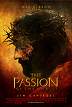
Some notes I made about Gibson's The Passion of the Christ, that I made when I first saw it.
I enjoyed the way it was made, the superb photography, the excellent direction, the amazing cast of unknown faces - most of them continental rather than US in origin - the curiosity of having them speak in the original languages (it's not often you hear Latin spoke!), some of the individual scenes - the healing of Malchus' ear is one that is really affecting.
I didn't enjoy the excess of the lashings, which go on and on and on, until they blunt your sense of horror at what's happening, and you want to say - Enough...this is a movie, not a reality.
Equally the journey up the hill to Golgotha goes on and on and on... and has the same effect on the audience. People have said Gibson, as a Catholic, has based this on the 14 stations of the cross - I didn't think it was quite as pointed as that, but it's a long time since I went round the stations.
I found it odd as to what was left out: John has his feet washed but not Peter, who was surely a more dramatic actor in that incident. Judas' suicide is given prolonged treatment, but who he is and why he's doing this isn't explained. People coming to this movie who are unfamiliar with the Jesus story will be quite puzzled by some of what goes on....there's no back story to a lot of it, and the flash backs we do get are rather random. Even the resurrection looks like another flashback until you notice, if you do, the nail hole in his hand.
I 'enjoyed' it more than I thought I would, but mostly from an aesthetic side. It moved me in places, but more in small ways than large. Jesus' suffering became over the top because one of the lessons of drama, as Gibson ought to know, that less is more. As for it being violent; well, Gibson himself has appeared in movies that are just as violent as this. The only difference is that they aren't about a revered figure....
Muyk Quhroughl
A friend suggested I might spell my name:
Muyk Quhroughl.
I was impressed: it gives hints of my Irish forebears, and the first name may have some connections with the Jews in my past.
On further reflection she added:
Sometimes you could spell it 'Majic', pronounced'Mah-yeek'. Majic Quhroughl, the Slavic Irishman.
I didn't think I could call up any Slavic ancestors, but she said:
 It's a public-relations tour de force. People notice it and they boggle. [As opposed to bloggle]. They say to you, 'MAGIC? How can you have a name like MAGIC??" and you reply, with a faint superior smile, 'It isn't Magic, silly. It's Mah-yeek. Short for MghCaejl. Old traditional Irish family name, handed down from my greatgreatgreatgrandfather, the Chieftain.'
Then they say, 'Huh! Nobody's THAT great,' and you murmur modestly, 'HE was. . . .'
And they'll be so impressed they'll never forget you, and the next time they want a book reviewed, they'll send it to you. (That solves the problem of having no Slavic ancestors)
Muyk Quhroughl.
I was impressed: it gives hints of my Irish forebears, and the first name may have some connections with the Jews in my past.
On further reflection she added:
Sometimes you could spell it 'Majic', pronounced'Mah-yeek'. Majic Quhroughl, the Slavic Irishman.
I didn't think I could call up any Slavic ancestors, but she said:
 It's a public-relations tour de force. People notice it and they boggle. [As opposed to bloggle]. They say to you, 'MAGIC? How can you have a name like MAGIC??" and you reply, with a faint superior smile, 'It isn't Magic, silly. It's Mah-yeek. Short for MghCaejl. Old traditional Irish family name, handed down from my greatgreatgreatgrandfather, the Chieftain.'
Then they say, 'Huh! Nobody's THAT great,' and you murmur modestly, 'HE was. . . .'
And they'll be so impressed they'll never forget you, and the next time they want a book reviewed, they'll send it to you. (That solves the problem of having no Slavic ancestors)
Friday, September 15, 2006
Neil Gaiman
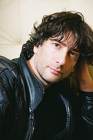 I can believe things that are true and I can believe things that aren’t true and I can believe things where nobody know if they’re true or not. I can believe in Santa Claus and the Easter Bunny and Marilyn Monroe and the Beatles and Elvis and Mister Ed. Listen – I believe that people are perfectible, that knowledge is infinite, that the world is run by secret banking cartels and is visited by aliens on a regular basis, nice ones that look like wrinkledy lemurs and bad ones who mutilate cattle and want our water and our women. I believe that the future sucks and I believe that the future rocks and I believe that one day White Buffalo woman is going to come back and kick everyone’s ass. I believe that all men are just over-grown boys with deep problems communicating and that the decline in good sex in America is coincident with the decline in Drive-In Movie theatres from state to state. I believe that all politicians are unprincipled crooks and I still believe that they are better than the alternative. I believe that California is going to sink into the sea when the big one comes, while Florida is going to dissolve into madness and alligators and toxic waste. I believe that anti-bacterial soap is destroying our resistance to dirt and disease so that one day we’ll all be wiped out by the common cold like the Martians in War of the Worlds. I believe that the greatest poets of the last century were Edith Sitwell and Don Marquis, that jade is dried dragon sperm, and that thousands of years ago in a former life I was a one-armed Siberian Shaman. I believe that Mankind’s destiny lies in the stars. I believe that candy really did taste better when I was a kid, that it’s aerodynamically impossible for a bumble-bee to fly, that light is a wave and a particle, that there’s a cat in a box somewhere who’s alive and dead at the same time (although if they don’t ever open the box to feed it it’ll eventually just be two different kinds of dead), and that there are stars in the universe billions of years older than the universe itself. I believe in a personal god who cares about me and worries and oversees everything I do. I believe in an impersonal god who set the universe in motion and went off to hang with her girlfriends and doesn’t even know that I’m alive. I believe in an empty and godless universe of causal chaos, background noise and sheer blind luck. I believe that anyone who claims to know what’s going on will lie about the little things too. I believe in absolute honesty and sensible social lies. I believe in a woman’s right to choose, a baby’s right to live, that while all human life is sacred there’s nothing wrong with the death penalty if you can trust the legal system implicitly, and no-one but a moron would ever trust the legal system. I believe that life is a game, life is a cruel joke and that life is what happens when you’re alive and that you might as well lie back and enjoy it.
The female hippy character, Sam, in Neil Gaiman’s American Gods: on a roll, and expressing the confused state of belief that she probably shares with many other American citizens. It’s also an aria for one of the main characters; Gaiman being both real and cynical and joking and hilarious all at the same time; and a marvellous expression of Sam’s smart/naïve/intellectual/simple personality. And a rare moment of warmth and humour in a fairly dark novel.
Friday, August 11, 2006
John Bluck
John Bluck
Mike Crowl, writing in the Dunedin Star Midweek and wondering why our newspapers devote space to sport rather than religion, said, 'this tells us a lot about ourselves as a nation; we're focused on the physical, the material, the tangible. We shy away from the aesthetic, the spiritual, the things that endure, or the things with a sense of the eternal about them.'
But I'm finding by the day that Mr Crowl was posing a false choice as the so-called physical things start to speak more loudly of mystery and possibility than the so-called spiritual things. A walk on the beach, a shared meal, a hand held tightly, a newly mown lawn, an old hat badge my great-grandfather wore have all, for me, taken on a spiritual meaning richer and deeper than many inherited symbols of faith.
There is a New Testament passage where Jesus tells some not very clever disciples that even the stones of the street cry out when people who ought to understand cannot see or hear. The passage haunts me because it is the story of my own journey in faith - a progress from believing that the best images of faith were borrowed and inherited, to finding that there are more telling images all around me, close to home.
But that seemingly obvious shift in location couldn't happen without the insight that the divine is to be found in ordinary, everyday things, here and now. An unholy alliance has been formed in our Pakeha religious experience between the otherworldly and the other side of the world - spirituality and geography fused to confuse us.
Rather than theologians it has been poets such as Richard Wilbur who have helped me untangle that confusion. In a poem entitled 'Love calls us to the things of this world,' Wilbur writes of a man awakening to the sounds and smell of laundry being hung to dry in the sun:
From chapter 10 of Long, White & Cloudy, published by Hazard Press 1998
Mike Crowl, writing in the Dunedin Star Midweek and wondering why our newspapers devote space to sport rather than religion, said, 'this tells us a lot about ourselves as a nation; we're focused on the physical, the material, the tangible. We shy away from the aesthetic, the spiritual, the things that endure, or the things with a sense of the eternal about them.'
But I'm finding by the day that Mr Crowl was posing a false choice as the so-called physical things start to speak more loudly of mystery and possibility than the so-called spiritual things. A walk on the beach, a shared meal, a hand held tightly, a newly mown lawn, an old hat badge my great-grandfather wore have all, for me, taken on a spiritual meaning richer and deeper than many inherited symbols of faith.
There is a New Testament passage where Jesus tells some not very clever disciples that even the stones of the street cry out when people who ought to understand cannot see or hear. The passage haunts me because it is the story of my own journey in faith - a progress from believing that the best images of faith were borrowed and inherited, to finding that there are more telling images all around me, close to home.
But that seemingly obvious shift in location couldn't happen without the insight that the divine is to be found in ordinary, everyday things, here and now. An unholy alliance has been formed in our Pakeha religious experience between the otherworldly and the other side of the world - spirituality and geography fused to confuse us.
Rather than theologians it has been poets such as Richard Wilbur who have helped me untangle that
 confusion. In a poem entitled 'Love calls us to the things of this world,' Wilbur writes of a man awakening to the sounds and smell of laundry being hung to dry in the sun:
Outside the open windowThat way of seeing the washing, and the world, makes it infinitely easier to look for and expect to find a spirituality of this time and place, anchored in the ordinary things that happen, even in the trees you drive past on the road.
The morning air is awash
with angels.
From chapter 10 of Long, White & Cloudy, published by Hazard Press 1998
Saturday, June 17, 2006
Walter Wangerin
When books work well, it isn't just that we memorise them and then, by our will and our personal wisdom, shape our lives to follow them. Rather, when books work for us, we begin to walk beside the mind that created the book. That mind may be so much wiser than ours, but we walk beside it until soon we are walking like that one.
The question becomes, Who is going to teach you both how to interpret the world around you, to see it in small, and to come to a true understanding of it, organising the context in which you live? A child enters the world and really doesn't make sense of it but lives in sort of a senselessness of existence. The kid first begins to know her little house and her parents, and they become the whole world to that child. You pull a child apart from that house and that well-ordered nicely-constructed, beloved family, and the kid is lost - literally lost. As the child gets older, it becomes the child's business to read the events and the details of the universe in such a way that she puts them together so that they make sense.
So the question becomes, Who are you going to allow to become your 'heaper into heaps' and your 'piler into piles [as the old Sanskrit meaning of the word 'poet' has it]? Who will shape the world that you enter into and dwell in? Are you going to allow football to do that, so all the world is seen in a contest? Are you going to allow simpleminded understandings - like the cartoons, newspapers or the government - do that for you? Or are you going to enter into the sweet complexity of minds, this living treasure of singers and writers who embrace more details with greater richness of beauty, deeper understanding of what is truly evil, what is good and what is the precession of human experience?
You want the minds of those who have created whole cultures of insight. The more complexly we see the world, the more capable we are of admitting many people into that world - people who are not like us. Books open our eyes to the complex truths that simple, mindless stories simply have no names for. So why not pick the best?
I don't mind the people who read romances, but that's formula fiction. It repeats the same world over and over again, and it's a profoundly limited world. And every one of the people who loves romantic fiction has a mind better than the world that it shapes. We call that escapism. Gerard Manley Hopkins offers his poetry as inscapism - to escape into things, truly, not escape from them.That's the influence of great books; they teach us how to see the world that is.
From chapter 19 of Indelible Ink - 22 international Christian writers discuss the books that shape their faith, published by CWR 2
The question becomes, Who is going to teach you both how to interpret the world around you, to see it in small, and to come to a true understanding of it, organising the context in which you live? A child enters the world and really doesn't make sense of it but lives in sort of a senselessness of existence. The kid first begins to know her little house and her parents, and they become the whole world to that child. You pull a child apart from that house and that well-ordered nicely-constructed, beloved family, and the kid is lost - literally lost. As the child gets older, it becomes the child's business to read the events and the details of the universe in such a way that she puts them together so that they make sense.
So the question becomes, Who are you going to allow to become your 'heaper into heaps' and your 'piler into piles [as the old Sanskrit meaning of the word 'poet' has it]? Who will shape the world that you enter into and dwell in? Are you going to allow football to do that, so all the world is seen in a contest? Are you going to allow simpleminded understandings - like the cartoons, newspapers or the government - do that for you? Or are you going to enter into the sweet complexity of minds, this living treasure of singers and writers who embrace more details with greater richness of beauty, deeper understanding of what is truly evil, what is good and what is the precession of human experience?
You want the minds of those who have created whole cultures of insight. The more complexly we see the world, the more capable we are of admitting many people into that world - people who are not like us. Books open our eyes to the complex truths that simple, mindless stories simply have no names for. So why not pick the best?
I don't mind the people who read romances, but that's formula fiction. It repeats the same world over and over again, and it's a profoundly limited world. And every one of the people who loves romantic fiction has a mind better than the world that it shapes. We call that escapism. Gerard Manley Hopkins offers his poetry as inscapism - to escape into things, truly, not escape from them.That's the influence of great books; they teach us how to see the world that is.
From chapter 19 of Indelible Ink - 22 international Christian writers discuss the books that shape their faith, published by CWR 2
Friday, June 16, 2006
Churchill and Galbraith
It’s been a long time since I last added anything to this blog – a situation that I suspect happens to many blogs after the initial enthusiasm – but I was struck by a quote from Winston Churchill when reading Os Guinness’s book, Prophetic Untimeliness, today. The wonderful use of language and irony is typical of Churchill.
In 1936, when the Stanley Baldwin government called for a review of the situation, Churchill commented acidly,
‘Anyone can see what the situation is: the Government simply cannot make up their mind, or they cannot get the Prime Minister to make up his mind. So they go on in a strange paradox, decided only to be undecided, resolved to be irresolute, adamant for drift, solid for fluidity, all powerful to be impotent.’
A few months ago we caught most of a one-off television biopic of Churchill (called The Gathering Storm) which covered those ‘wilderness years’ when he was abandoned by the Government and given little part to play in England’s future. Albert Finney did the cigar-chomping with great gusto and also expressed the immense hurt that Churchill felt at being ousted from the work he loved. It was also interesting to see the close relationship he had with his wife (played with great grace and stature by Vanessa Redgrave), something that’s seldom thought about in regard to Churchill.
__________________________
It’s a very peculiar feeling that the older you get, the less old you actually feel inside. I guess there was a time when I felt older as a person, but now oldness seems a non-existent thing. Inside, I don’t sense myself as being any different to when I was a child. I’m the same person – in a different-sized and shaped body, and one that certainly isn’t as flexible as I’d like – and I find it hard to distinguish anything different about the way I was (as opposed to way the I perceived the world) to the way I am now.
I can remember certain events in my childhood, and remember a greater physical freedom at that time, but the person was still the same me. Somehow he hasn’t aged, anymore than, if it were possible to go backwards in time, I would become younger.
Just noticed a quote from J K Galbraith (it was in the NZ Listener):
If wrinkles must be written upon our brows, let them not be written upon the heart. The spirit should never grow old.
In 1936, when the Stanley Baldwin government called for a review of the situation, Churchill commented acidly,
‘Anyone can see what the situation is: the Government simply cannot make up their mind, or they cannot get the Prime Minister to make up his mind. So they go on in a strange paradox, decided only to be undecided, resolved to be irresolute, adamant for drift, solid for fluidity, all powerful to be impotent.’

A few months ago we caught most of a one-off television biopic of Churchill (called The Gathering Storm) which covered those ‘wilderness years’ when he was abandoned by the Government and given little part to play in England’s future. Albert Finney did the cigar-chomping with great gusto and also expressed the immense hurt that Churchill felt at being ousted from the work he loved. It was also interesting to see the close relationship he had with his wife (played with great grace and stature by Vanessa Redgrave), something that’s seldom thought about in regard to Churchill.
__________________________
It’s a very peculiar feeling that the older you get, the less old you actually feel inside. I guess there was a time when I felt older as a person, but now oldness seems a non-existent thing. Inside, I don’t sense myself as being any different to when I was a child. I’m the same person – in a different-sized and shaped body, and one that
 certainly isn’t as flexible as I’d like – and I find it hard to distinguish anything different about the way I was (as opposed to way the I perceived the world) to the way I am now.
I can remember certain events in my childhood, and remember a greater physical freedom at that time, but the person was still the same me. Somehow he hasn’t aged, anymore than, if it were possible to go backwards in time, I would become younger.
Just noticed a quote from J K Galbraith (it was in the NZ Listener):
If wrinkles must be written upon our brows, let them not be written upon the heart. The spirit should never grow old.
Saturday, December 31, 2005
Kerry Packer
 Kerry Packer, whom I hadn’t previously thought of as a theologian, said at the time of his 1990 heart attack, when he was pronounced clinically dead for eight minutes, "The good news is there's no devil. The bad news is there's no heaven. There's nothing." This piece of information was played back after the news report today of his (very private) funeral.
Well, the good news is that now he’ll know whether he was actually right. The bad news, for him, anyway, is that he may have been totally wrong.
Elsewhere it was stated that he was making a million dollars a day out of his investments, business interests and so on. Pity that none of it will do him any good where he’s gone – wherever he’s gone.
On the basis of my understanding, he’ll stand, like everyone else, before God Almighty, and have to account for his life. I wonder if being a ‘brash, swashbuckling businessman with a voracious appetite for gambling, both in the boardroom and in the casino’ will be deemed as a worthwhile way to have spent his life. Or the fact that he revived the game of cricket: will God be interested in this, I wonder?
Let’s hope Mr Packer was secretly giving away some of those daily millions to the poor and needy. That would help him a little.
Wednesday, December 28, 2005
The Amaziah complex
I suppose there is an analogous situation for some of us. We might call ourselves ‘evangelicals’ and yet there is little zeal after personal piety, little effort to teach and indoctrinate our families, not much passion to bear personal or public witness – or to raise our voice against unbelief in our church denomination. We’re evangelical – no need to go bonkers over it. Maybe it’s the Amaziah complex: we don’t see why righteousness must be rigorous or godliness aggressive.
Dale Ralph Davis, discussing 2 Kings 14 (with some irony) in his book, The Power and the Fury, page 205.
Dale Ralph Davis, discussing 2 Kings 14 (with some irony) in his book, The Power and the Fury, page 205.
Monday, December 05, 2005
The Great Divorce
Reading C S Lewis’ The Great Divorce again the other day, for at least the third time, I came across this section on page 71:
"This curious wish to describe Hell turned out, however, to be only the mildest form of a desire very common among the Ghosts – the desire to extend Hell, to bring it bodily, if they could, into Heaven. There were tub-thumping Ghosts who in thin, bat-like voices urged the blessed spirits [already in Heaven] to shake off their fetters, to escape from their imprisonment in happiness, to tear down the mountains with their hands, to seize Heaven ‘for their own good’: Hell offered her co-operation."
How like the last book in Philip Pullman’s famous trilogy, His Dark Materials, this sounds. It could almost be a summary of what goes on in the great battle in that book, quite apart from a reminder of that awful section where the children ‘release’ the spirits under the Earth into…what? Not life, but nothingness!
"This curious wish to describe Hell turned out, however, to be only the mildest form of a desire very common among the Ghosts – the desire to extend Hell, to bring it bodily, if they could, into Heaven. There were tub-thumping Ghosts who in thin, bat-like voices urged the blessed spirits [already in Heaven] to shake off their fetters, to escape from their imprisonment in happiness, to tear down the mountains with their hands, to seize Heaven ‘for their own good’: Hell offered her co-operation."
How like the last book in Philip Pullman’s famous trilogy, His Dark Materials, this sounds. It could almost be a summary of what goes on in the great battle in that book, quite apart from a reminder of that awful section where the children ‘release’ the spirits under the Earth into…what? Not life, but nothingness!
Saturday, December 03, 2005
Men, those dangerous creatures
Obviously the PC brigade has found yet another way to try and make us blokes feel ashamed with this latest revelation that men (horrors!) shouldn't sit beside unaccompanied children on passenger planes. (Not just shouldn't, in fact, are not allowed to.) What I can't understand is how this decision could have come about....weren't there any men involved in making it and why did they kowtow to whoever thought it was a good idea?
A friend of mine, Pat, (for Patricia) whom I bounce ideas off a good deal, replied to my comment above:
"I can't imagine who was involved in that decision by the airlines. I strongly doubt that the decision could have been made by women alone, because the majorityof airline executives are men. It would be lawyers, I suspect, trying to out-guess possible future lawsuits. It seems to me that if airlines are willing to carry unaccompanied children (for profit), then they are in loco parentis for the duration of the flight, and should accept and carry out the responsibility which they have willingly undertaken, by exercising parent-like direct supervision. Clearly, they don't bloody feel like it. So they try to sidestep liability by parking the kids wherever, and then inconveniencing and insulting other paying passengers. I don't think anyone 'kowtowed'; I suspect the decision-makers thought what they were doing was jolly good business practice. I think this policy is - what word should I use, now? It's beyond my ability to sum up in a single adjective. Pathetic, irrational, cruel, stupid, hurtful, pointless, and most likely ineffective, for starters. This morning's ODT says the policy has been in place 'for years' (I doubt that) and is in line with 'the best international practice' (I doubt that, too), or words to that effect. I think it stinks, I think the airlines are trying frantically to put a positive spin on it, and I hope they don't succeed. They sure as hell don't convince me.
Now then. I can't say fairer than that. Tell you what: I reckon air-freight companies must have facilities for transporting dangerous wildlife, like lions and other big cats, right? They must have cargo holds with strong cages built in - room to move around and lie down, and with space for adequate food and water supplies, but properly locked up and SECURE. Obviously, that's where men should be required to travel, eh? Or maybe the entire aircraft ought to be gender-segregated."
A friend of mine, Pat, (for Patricia) whom I bounce ideas off a good deal, replied to my comment above:
"I can't imagine who was involved in that decision by the airlines. I strongly doubt that the decision could have been made by women alone, because the majorityof airline executives are men. It would be lawyers, I suspect, trying to out-guess possible future lawsuits. It seems to me that if airlines are willing to carry unaccompanied children (for profit), then they are in loco parentis for the duration of the flight, and should accept and carry out the responsibility which they have willingly undertaken, by exercising parent-like direct supervision. Clearly, they don't bloody feel like it. So they try to sidestep liability by parking the kids wherever, and then inconveniencing and insulting other paying passengers. I don't think anyone 'kowtowed'; I suspect the decision-makers thought what they were doing was jolly good business practice. I think this policy is - what word should I use, now? It's beyond my ability to sum up in a single adjective. Pathetic, irrational, cruel, stupid, hurtful, pointless, and most likely ineffective, for starters. This morning's ODT says the policy has been in place 'for years' (I doubt that) and is in line with 'the best international practice' (I doubt that, too), or words to that effect. I think it stinks, I think the airlines are trying frantically to put a positive spin on it, and I hope they don't succeed. They sure as hell don't convince me.
Now then. I can't say fairer than that. Tell you what: I reckon air-freight companies must have facilities for transporting dangerous wildlife, like lions and other big cats, right? They must have cargo holds with strong cages built in - room to move around and lie down, and with space for adequate food and water supplies, but properly locked up and SECURE. Obviously, that's where men should be required to travel, eh? Or maybe the entire aircraft ought to be gender-segregated."
Singaporean Execution
I must be a hard-hearted person, I think, but I’m finding it very difficult to understand why there was such an outpouring of sympathy for the young Australian man, Nguyen Tuong Van, who has just been executed in Singapore, why people were saying, ‘This is barbaric,’ and why they were condemning the Singaporeans for hanging people.
The bloke was carrying drugs, knowingly. He knew the risks. There is no secret about the Singaporean attitude to drug-smuggling. However high-minded his motives, he was doing wrong. It would have been just as illegal if he was bringing them into Australia.
Yes, it is sad that he ended up this way, but what about all those who would have suffered from the effects of the drugs he was smuggling if they’d actually got through customs? They don’t seem to have been considered in this case at all.
The bloke was carrying drugs, knowingly. He knew the risks. There is no secret about the Singaporean attitude to drug-smuggling. However high-minded his motives, he was doing wrong. It would have been just as illegal if he was bringing them into Australia.
Yes, it is sad that he ended up this way, but what about all those who would have suffered from the effects of the drugs he was smuggling if they’d actually got through customs? They don’t seem to have been considered in this case at all.
Saturday, November 19, 2005
New Music in Orchestral Concerts
I don't think programming more new music will make sense until the new music is better: engaging the world rather than retreating into these near-static marathon evocations of nothing or directionless explorations of timbre or the straggling serial compositions (the amazing musical technique almost nobody can hear!).
Phillip Bush - November 17, 2005
One of the comments on Greg Sandow's book in progress: The Future of Classical Music?
Phillip Bush - November 17, 2005
One of the comments on Greg Sandow's book in progress: The Future of Classical Music?
Saturday, November 12, 2005
The Wretched Treaty (of Waitangi)?
Maoris are assumed to be different - at least by the treatyist brigade and their hangers-on.
Maori are a sequestered, self-interested group driven by a never-ending sense of entitlement at the rest of society’s expense. Maori have more rights than other people, but no responsibilities to anyone other than themselves.
It is time this nonsense was ended and the abolition of Maori seats would be a fine first step. Not, as the professors would caution, when Maori themselves in the fullness of time conclude they are tired of unfair advantage, but as soon as it can be arranged. Apartheid, by whatever smokescreen we care disguise it, is not acceptable anymore.
That done, we could commence a real debate on the wretched treaty, which has long outlived its relevance and which, mutating like a toxic virus and sprouting principles ad nauseum, serves purely as an instrument of division. It is a zombified relic of a time long gone, and a sure sign that, as a nation, our condition is schizophrenic.
Apartheid Unacceptable (Time for Real Debate on ‘wretched treaty’) Dave Witherow – Otago Daily Times columnist, 28th Oct, 2005.
Dave in full flight, and surprisingly getting away with this without a screed of follow-up letters to the Editor.
UPDATE, 27.11.17
The piece above was written in 2005, and in 2017 Dave is still at it. His latest rant about things Maori - this time the 'overuse' of Maori language in the media - did get some angry letters to the Editor, but not so many as you'd expect perhaps.
Maori are a sequestered, self-interested group driven by a never-ending sense of entitlement at the rest of society’s expense. Maori have more rights than other people, but no responsibilities to anyone other than themselves.
It is time this nonsense was ended and the abolition of Maori seats would be a fine first step. Not, as the professors would caution, when Maori themselves in the fullness of time conclude they are tired of unfair advantage, but as soon as it can be arranged. Apartheid, by whatever smokescreen we care disguise it, is not acceptable anymore.
That done, we could commence a real debate on the wretched treaty, which has long outlived its relevance and which, mutating like a toxic virus and sprouting principles ad nauseum, serves purely as an instrument of division. It is a zombified relic of a time long gone, and a sure sign that, as a nation, our condition is schizophrenic.
Apartheid Unacceptable (Time for Real Debate on ‘wretched treaty’) Dave Witherow – Otago Daily Times columnist, 28th Oct, 2005.
Dave in full flight, and surprisingly getting away with this without a screed of follow-up letters to the Editor.
UPDATE, 27.11.17
The piece above was written in 2005, and in 2017 Dave is still at it. His latest rant about things Maori - this time the 'overuse' of Maori language in the media - did get some angry letters to the Editor, but not so many as you'd expect perhaps.
Thursday, November 10, 2005
44 Scotland St - and a Funeral
 It’s a curious thing that McCall Smith seems to enjoy the random adventures of the people at 44 Scotland St and environs more than those in the Philosophy Club. The latter are a bit drear, a bit earnest, a bit too precious even, with the middle-aged main character and her concerns for the young men of Edinburgh (who all seem a bit fey).
The people in Scotland St are more robust, even though one of the main male characters is narcissistic – at least he’s energetically so, and provides some of the high comedy moments in the first novel in the series.
It would be interesting to write a novel in this way, revealing a section a day, no going back, no ability to repair mistakes, no way of getting a character out of a difficult spot by rewriting (Smith’s usual method is just to forget the character!). And the pressure of having to keep up. If I thought a weekly column was an achievement, what about a daily chapter!
 |
| Lindsay Crooks |
seemed almost as if the surfies had taken over (the aging surfies, for the most part – surfing is obviously a sport a man can carry on in through his mature years). There was little about
But the other thing that was disappointing was that there was no preaching, even speaking, from the minister. Yes, he prayed, effectively and sincerely, and we sang a hymn, and Lindsay’s stepson or godson, (I’m not quite sure who he was) sang a very definite praise song, but what a lost opportunity for the minister to speak. I can only wonder if he was cautioned off it – by the surfing community, perhaps (‘they won’t want any preaching; they’re just ordinary blokes, you know?’). Of course I’m bound to be wrong in that. Whoever made the decision, however, it was the wrong one. People’s hearts are seldom more open to listening to words about eternity than when they’re in the middle of a funeral – even I am, and I’ve been listening to eternal words for decades, and hearing them too. It’s a time when the bubble of life is easily burst, and we know – we really, really know – that our time on this earth isn’t eternal, it’s severely limited. In some cases, as in Lindsay’s, far more limited than it ‘should’ be; and in Rod Donald’s – in his case the fact of his dying so suddenly and without apparent cause is even more of a message to semi-deaf ears).
Wednesday, November 09, 2005
Orthodoxy
 What we suffer today is humility in the wrong place. Modesty has moved from the organ of ambition. Modesty has settled upon the organ of conviction; where it was never meant to be. A man was meant to be doubtful about himself, but undoubting about the truth; this has been exactly reversed. Nowadays the part of a man that a man does assert is exactly the part he ought not to assert – himself. The part he doubts is exactly the part he ought not to doubt – the Divine Reason. The truth is that there is a real humility typical of our time; but it so happens that it is practically a more poisonous humility than the wildest prostrations of the ascetic.
Orthodoxy - G K Chesterton
Monday, November 07, 2005
Chesterton and Polkinghorne
Pessimism is not in being tired of evil but in being tired of good. Despair does not lie in being weary of suffering, but in being weary of joy. It is when for some reason or other the good things in a society no longer work that the society beings to decline; when it food does not feed, when its cures do not cure, when its blessings refuse to bless.
The Everlasting Man – G K Chesterton – chapter 8
The analogy between scientific and theological enquiry is not complete. Theology does not enjoy the luxury that experiment grants to science, of being able to deal with essentially controllable and repeatable experience. It has to look to the given and unrepeatable revelatory events in which God has chosen to make the divine nature known. The closest scientific analogues are cosmology’s reconstruction of the unique history immediately following the big band and biology’s reading from the fossil record the story of the unique evolutionary development of life. Theological enquiry is also not simply concerned with quenching the intellectual thirst for understanding. Its insights demand response and carry implications for human conduct.
Belief in God in an Age of Science – John Polkinghorne – chapter 2
I find it interesting that Polkinghorne uses these two 'analogues' to explain the problems of theology, even though in some circles both analogues are classed more highly than as revelatory events.
The Everlasting Man – G K Chesterton – chapter 8
The analogy between scientific and theological enquiry is not complete. Theology does not enjoy the luxury that experiment grants to science, of being able to deal with essentially controllable and repeatable experience. It has to look to the given and unrepeatable revelatory events in which God has chosen to make the divine nature known. The closest scientific analogues are cosmology’s reconstruction of the unique history immediately following the big band and biology’s reading from the fossil record the story of the unique evolutionary development of life. Theological enquiry is also not simply concerned with quenching the intellectual thirst for understanding. Its insights demand response and carry implications for human conduct.
Belief in God in an Age of Science – John Polkinghorne – chapter 2
I find it interesting that Polkinghorne uses these two 'analogues' to explain the problems of theology, even though in some circles both analogues are classed more highly than as revelatory events.
Wednesday, November 02, 2005
Ahead of the Class
 When the first draft [of the Action Plan] is completed it all sounds wonderful but next morning I feel I’m receiving a message from Above when I open my paper and read some words by Ferdinand Mount, the political historian, who has studied why some government regimes last longer than others. He calls the long-lasting ones ‘survivor regimes’ and argues that they ‘do not usually arrive in office with any detailed set of plans stretching over years or, if they do, the plans have speedily to be rewritten under the pressure of events.’ The first need of survivor regimes, he believes, is ‘to communicate a sense of confidence and to establish stability. ‘Characteristically, they will then develop a rolling agenda.’
I stick the cutting on the noticeboard in my office. Action Plans are all very fine I know, but it’s how we respond to day-to-day events that will really matter. The Action Plan can’t possibly encapsulate everything we plan to do.
Ahead of the Class by Marie Stubbs – chapter 2
Sunday, October 30, 2005
Sons of the Father
 I would say, no, I never had a father. I had no father in the sense of a man who had a son whom he regarded as his own; whom he cherished a cared for, no matter how imperfectly, from when that son was born until he was grown. I know I am far from alone in not having had this kind of father. The trouble is that no matter how distant the events of my childhood become; no matter how much I know, understand and accept; no matter how much I rationalize and forgive, the child in me still cries out, ‘Why did he never come and find me?’
 Sons of the Father – Philip Temple – page 197
Timebends
 Before the idol, men remain dependent children. Before God they are burdened and at the same time liberated to participate in the decisions of endless creation. “It was an idol and no God. An idol tells people exactly what to believe, God presents them with choices they have to make for themselves. The difference is far from insignificant; before the idol men remain dependent children, before God they are burdened and at the same time liberated to participate in the decisions of endless creation.
Timebends – Arthur Miller - page 259
Tuesday, October 25, 2005
Predictive text
I’ve started reading Bill Bryson’s, Mother Tongue, that marvellously anecdotal and humorous look at English and a whole host of other languages. It’s getting a bit old, of course, having been written in 1990, before the age of texting. Celia just received a text message from Dominic, replied to it, and then received an answer back almost immediately. ‘How does he do that?’ she asked. I told her that Dom and Ben actually use predictive text all the time, but leave the words that the cellphone comes up instead of changing them to the word they intend. Consequently they’re virtually speaking in a foreign language or code – few other people would understand their messages to each other, which somehow manage both to communicate and be hilarious at the same time.
Monday, October 24, 2005
Garrick Tremain has a cartoon in the ODT today comparing the bird flu pandemic (which, of course, hasn’t actually ‘begun’) to the YK2 bug hysteria. And perhaps that’s not unrealistic: putting the death rate so far in perspective, there have been an almost minimal number of deaths from the flu, and not that many more who’ve been sick because of it. Of course, the deaths themselves are all tragic for the families involved, but is it realistic to call this a possible pandemic? Wouldn’t a pandemic catch the world almost unawares and take control before humans had got their act together – or are we at least nowadays a bit more up with the play when it comes to such things?
People are hedging their bets on it: a few days ago the chief medical officer of Britain said, ‘A bird flu pandemic will hit Britain - but not necessarily this winter.’ And in another report, it says: "Scientists have warned that a strain of the disease deadly to humans could cause a lethal pandemic if it mutates into a form that can be spread from person to person. [Note that ‘if’.] The H5N1 strain has killed more than 60 people in South East Asia since 2003. However, of those only one is suspected to have died after catching the virus from another human, and experts stress the risk is low."
So people have caught it from the birds, apparently, but not from each other, and that’s where the worst problems would arise. But 60 deaths in two years? In a part of the world where the population is around one billion? That’s about .00000006%. Even 50,000 people out of Britain’s population is about 001% - again, though a large number in real terms, not a large number in terms of the population.
Am I dismissing the value of these individual lives, and the effect such losses would have on the general state of the country? No, not at all, but I am wondering if there isn’t a rising hysteria being created by the media about something that hasn’t yet proven to be anywhere nearly as dramatic as made out. More than twice as many people have just been killed in an air crash than have died of bird flu so far – are we going to stop people flying as a result?
People are hedging their bets on it: a few days ago the chief medical officer of Britain said, ‘A bird flu pandemic will hit Britain - but not necessarily this winter.’ And in another report, it says: "Scientists have warned that a strain of the disease deadly to humans could cause a lethal pandemic if it mutates into a form that can be spread from person to person. [Note that ‘if’.] The H5N1 strain has killed more than 60 people in South East Asia since 2003. However, of those only one is suspected to have died after catching the virus from another human, and experts stress the risk is low."
So people have caught it from the birds, apparently, but not from each other, and that’s where the worst problems would arise. But 60 deaths in two years? In a part of the world where the population is around one billion? That’s about .00000006%. Even 50,000 people out of Britain’s population is about 001% - again, though a large number in real terms, not a large number in terms of the population.
Am I dismissing the value of these individual lives, and the effect such losses would have on the general state of the country? No, not at all, but I am wondering if there isn’t a rising hysteria being created by the media about something that hasn’t yet proven to be anywhere nearly as dramatic as made out. More than twice as many people have just been killed in an air crash than have died of bird flu so far – are we going to stop people flying as a result?
Friday, October 21, 2005
A simple money order
Once upon a time a person could send a money order anywhere in the world, and it would be cashed at a Post Office in the blink of an eye.
No more. For some reason, money orders are regarded as the scum, or dregs, of banking, and banks don’t like to get their fingers dirty.
My shop received a money order today to pay for a book the customer had ordered. The money order was sent from the Bank of Montreal and designated in US dollars. What could be simpler?
The shop’s bank, Westpac, wouldn’t take it into our account, claiming only Post Offices do money orders. NZ Post, when asked, said, yes, they do NZ money orders, but not overseas ones. Try Cash Converters! What? Yes, according to the person at the Post Office, Cash Converters changes international money orders. Of course, the person at Cash Converters had only been there a week, and knew nothing about it – and when he asked further, it turned out Cash Converters doesn’t do anything with international money orders. Not now.
I’ve lost track of how I got onto Western Union, but they said, No, try ANZ, they’re supposed to do international money orders.
Now the fun started for real. After going through the usual process of having to wait to find out which button to press on the phone, I finally got through to someone who didn’t know anything about it, but would put me through to the International Banking section. Who seemed to be out for a late afternoon tea. The frustrated girl finally got someone called Stuart (his real name, since giving him a pseudonym wouldn’t make any difference) and Stuart, after some debate, said yes, they would deal with it if I had an account with ANZ. The only account I have nowadays (after having given up on ANZ in disgust in the past when they used to treat their customers like dirt) is a credit card. Can I deposit this money order into the credit card? Yes, as long as you fax me a copy of the money order to verify it. That seemed simple enough, and I did. Stuart rang me back after five or ten minutes and said I could go ahead. Was he sure the bank teller would actually do it when I went there? Oh, yes, he’d authorised it.
I went to the ANZ Moray Place branch. As always, there was a long queue and only two tellers. It was getting close to 4.30 pm by this time, so I ran along to the ANZ on the corner of Hanover St. No queue, and half a dozen tellers.
I went up to the young lady at the counter, explained what had happened with Stuart, and – I could tell – she wasn’t believing this. Worse, she now brought up the fact that the money order was made out to the shop, not to me, while the card was in my name, not the shop’s. Stuart hadn’t mentioned this as a problem, but it did occur to me about this time that perhaps that hadn’t been clear.
Of course she had to ring ANZ International banking, and of course, Stuart agreed that it couldn’t be put into my credit card account, when it was made out to the shop. All this fuss, mind you, for the equivalent of NZ$80. While I’m standing there waiting for the girl to talk to Stuart – at length, it seemed – I was looking at the ad for ANZ’s latest big deal: get a home loan with them and they’ll give you an island holiday. (It doesn’t say what you have to do, of course, to qualify for this holiday, but I suspect it’s not given out to all and sundry). I was thinking, here they can afford to give away island holidays, but they can’t afford to transact a piddling money order, because that’s what the girl was now telling me – and so did her superior, when she called her in. Sincere apologies, Stuart must have misunderstood, no way it could be done, have to go back to Westpac, since ANZ doesn’t have ‘a relationship with your shop.’ This from the bank who talks about the ‘better we know you the better we can serve you.’
Right.
Of course, Westpac, like all the banks, was now closed for the day, so I rang them. And got one of those young ladies who knows that ‘it can’t be done’ but has ‘no idea why not.’ Could she put me onto someone who does have an idea. This person had apparently gone for an early tea break, considering the length of time it took to find her.
When she arrived, she turned out not to be the International Banking Person for Westpac, but merely the ‘team leader.’ Team Leaders are thick on the ground these days, but not easy to get to if you want to speak to them. ‘This is what my team leader says….’ ‘My team leader told me….’ Could I speak to the team leader? ‘Just a minute, I’ll ask her…..She says so and so…’
Team Leaders don’t like to speak to the hoi polloi.
Anyway, this Westpac TL did say that the teller at Westpac should have rung up and asked her, or someone in her department, how to deal with this money order. (Remember the money order?)
I suspect that it wouldn’t have made any difference, but we’ll give it a try when the banks are open on Tuesday (it’s Labour Weekend, so they’re closed on Monday, of course) and see how much of the rigmarole I have to go through again then.
No more. For some reason, money orders are regarded as the scum, or dregs, of banking, and banks don’t like to get their fingers dirty.
My shop received a money order today to pay for a book the customer had ordered. The money order was sent from the Bank of Montreal and designated in US dollars. What could be simpler?
The shop’s bank, Westpac, wouldn’t take it into our account, claiming only Post Offices do money orders. NZ Post, when asked, said, yes, they do NZ money orders, but not overseas ones. Try Cash Converters! What? Yes, according to the person at the Post Office, Cash Converters changes international money orders. Of course, the person at Cash Converters had only been there a week, and knew nothing about it – and when he asked further, it turned out Cash Converters doesn’t do anything with international money orders. Not now.
I’ve lost track of how I got onto Western Union, but they said, No, try ANZ, they’re supposed to do international money orders.
Now the fun started for real. After going through the usual process of having to wait to find out which button to press on the phone, I finally got through to someone who didn’t know anything about it, but would put me through to the International Banking section. Who seemed to be out for a late afternoon tea. The frustrated girl finally got someone called Stuart (his real name, since giving him a pseudonym wouldn’t make any difference) and Stuart, after some debate, said yes, they would deal with it if I had an account with ANZ. The only account I have nowadays (after having given up on ANZ in disgust in the past when they used to treat their customers like dirt) is a credit card. Can I deposit this money order into the credit card? Yes, as long as you fax me a copy of the money order to verify it. That seemed simple enough, and I did. Stuart rang me back after five or ten minutes and said I could go ahead. Was he sure the bank teller would actually do it when I went there? Oh, yes, he’d authorised it.
I went to the ANZ Moray Place branch. As always, there was a long queue and only two tellers. It was getting close to 4.30 pm by this time, so I ran along to the ANZ on the corner of Hanover St. No queue, and half a dozen tellers.
I went up to the young lady at the counter, explained what had happened with Stuart, and – I could tell – she wasn’t believing this. Worse, she now brought up the fact that the money order was made out to the shop, not to me, while the card was in my name, not the shop’s. Stuart hadn’t mentioned this as a problem, but it did occur to me about this time that perhaps that hadn’t been clear.
Of course she had to ring ANZ International banking, and of course, Stuart agreed that it couldn’t be put into my credit card account, when it was made out to the shop. All this fuss, mind you, for the equivalent of NZ$80. While I’m standing there waiting for the girl to talk to Stuart – at length, it seemed – I was looking at the ad for ANZ’s latest big deal: get a home loan with them and they’ll give you an island holiday. (It doesn’t say what you have to do, of course, to qualify for this holiday, but I suspect it’s not given out to all and sundry). I was thinking, here they can afford to give away island holidays, but they can’t afford to transact a piddling money order, because that’s what the girl was now telling me – and so did her superior, when she called her in. Sincere apologies, Stuart must have misunderstood, no way it could be done, have to go back to Westpac, since ANZ doesn’t have ‘a relationship with your shop.’ This from the bank who talks about the ‘better we know you the better we can serve you.’
Right.
Of course, Westpac, like all the banks, was now closed for the day, so I rang them. And got one of those young ladies who knows that ‘it can’t be done’ but has ‘no idea why not.’ Could she put me onto someone who does have an idea. This person had apparently gone for an early tea break, considering the length of time it took to find her.
When she arrived, she turned out not to be the International Banking Person for Westpac, but merely the ‘team leader.’ Team Leaders are thick on the ground these days, but not easy to get to if you want to speak to them. ‘This is what my team leader says….’ ‘My team leader told me….’ Could I speak to the team leader? ‘Just a minute, I’ll ask her…..She says so and so…’
Team Leaders don’t like to speak to the hoi polloi.
Anyway, this Westpac TL did say that the teller at Westpac should have rung up and asked her, or someone in her department, how to deal with this money order. (Remember the money order?)
I suspect that it wouldn’t have made any difference, but we’ll give it a try when the banks are open on Tuesday (it’s Labour Weekend, so they’re closed on Monday, of course) and see how much of the rigmarole I have to go through again then.
Thursday, October 20, 2005
Music and chaos
One must have a chaos inside oneself to give birth to a dancing star.
Michael Tippett - quoted in a number of places, but in fact the sentence seems to come from Fredrich Nietzsche.
Michael Tippett - quoted in a number of places, but in fact the sentence seems to come from Fredrich Nietzsche.
Adjectives and nouns...and centipedes
For I think we respect nouns (and what we think they stand for) too much. All my deepest, and certainly my earliest, experiences, seem of be of sheer quality. The terrible and the lovely are older and solider than terrible and lovely things. If a musical phrase could be translated into words at all it would become an adjective. A great lyric is very like a long, utterly adequate adjective.
C S Lewis – Letters to Malcolm – chapter XVI
Lewis putting paid to all those writing teachers who insist adjectives are very secondary in the scheme of things.
....who can dance no better than a centipede with wooden legs.
C S Lewis – Letters to Malcolm – chapter XVII
Tuesday, October 18, 2005
Better Off Without George, perhaps
There’s a ‘reprint’ of a column from The Guardian - 'Better Off Without Him?’ - by George Monibot, at AlterNet.
In spite of the fact that this guy writes a column regularly, this seems a prime example of ‘How not to write a column.’ Firstly, it constantly mixes Christian religion with religion in general. [His original words in italics]
Christian fundamentalists claim religion is associated with lower rates of violence, teen pregnancy and divorce. A new study says they couldn't be more wrong.
Are religious societies better than secular ones? It should be an easy question for atheists to answer.
Yes, it should, since it's Christians societies have founded hospitals, hospices, orphanages, and a variety of other good-dooer institutions. But as you'll note, he's switched from "Christian" to 'religious' within two paragraphs.
Most of those now seeking to blow people up -- whether with tanks and missiles or rucksacks and passenger planes -- do so in the name of God. In India, we see men whose religion forbids them to harm insects setting fire to human beings. A 14th-century Pope with a 21st-century communications network sustains his church's mission of persecuting gays and denying women ownership of their bodies. Bishops and rabbis in Britain have just united in the cause of prolonging human suffering, by opposing the legalization of assisted suicide. We know that the most dangerous human trait is an absence of self-doubt, and that self-doubt is more likely to be absent from the mind of the believer than the non-religious infidel.
Hmm...this is an interesting generalisation, that I think he might find wouldn't hold water in real terms. And we're prolonging human suffering by not letting people kill themselves?
But we also know that few religious governments have committed atrocities on the scale of Hitler's, Mao's or Stalin's (though, given their more limited means, the Spanish and British in the Americas, the British, Germans and Belgians in Africa, and the British in Australia and India could be said to have done their best).
So doesn't this contradict what he's just said in the previous paragraph?
It is hard to dismiss Dostoyevsky's suspicion that "If God does not exist, then everything is permissible."
Exactly - and this is much the same as what Chesterton said: when men stop believing in God, they start believing in anything.
Nor can we wholly disagree with the new Pope when he warns that "we are moving towards a dictatorship of relativism which ... has as its highest goal one's own ego and one's own desires." (We must trust, of course, that a man who has spent his life campaigning to become God's go-between, and who now believes he is infallible, is immune to such impulses).
Why does he keep disagreeing with himself? Making a point in one sentence and then contradicting it, or mocking it, in the next?
The creationists in the United States might be as mad as a box of ferrets, but what they claim to fear is the question which troubles almost everyone who has stopped to think about it: if our lives have no purpose, why should we care about other people's?
Now he's doing it again - the creationists are mad yet they believe something sensible.
We know too, as Roy Hattersley argued in the Guardian last month, that "good works ... are most likely to be performed by people who believe that heaven exists. The correlation is so clear that it is impossible to doubt that faith and charity go hand in hand."
He's not making much of a case against religion! And then he adds two anecdotes about the only heroes he's met both being religious.
The only two heroes I have met are both Catholic missionaries. Joe Haas, an Austrian I stayed with in the swamp forests of West Papua, had spent his life acting as a human shield for the indigenous people of Indonesia: every few months soldiers threatened to kill him when he prevented them from murdering his parishioners and grabbing their land.
Frei Adolfo, the German I met in the savannahs of northeastern Brazil, thought, when I first knocked on his door, that I was a gunman the ranchers had sent for him. Yet still he opened it. With the other liberation theologians in the Catholic church, he offered the only consistent support to the peasants being attacked by landowners and the government. If they did not believe in God, these men would never have taken such risks for other people.
Remarkably, no one, until now, has attempted systematically to answer the question with which this column began. But in the current edition of the Journal of Religion and Society, a researcher called Gregory Paul tests the hypothesis propounded by evangelists in the Bush administration, that religion is associated with lower rates of "lethal violence, suicide, non-monogamous sexual activity and abortion." He compared data from 18 developed democracies, and discovered that the Christian fundamentalists couldn't have got it more wrong.
But this wasn't the question that the column was asking....
"In general, higher rates of belief in and worship of a creator correlate with higher rates of homicide, juvenile and early adult mortality, STD infection rates, teen pregnancy, and abortion ... None of the strongly secularized, pro-evolution democracies is experiencing high levels of measurable dysfunction."
So is this researcher saying that the US is a Christian nation? He doesn't tell us. What the researcher has plainly failed to take into account is that the US is anything but a Christian nation. It has claims to being one, but the majority of people in the country believe in God barely at all, in fact.
Within the United States "the strongly theistic, anti-evolution South and Midwest" have "markedly worse homicide, mortality, STD, youth pregnancy, marital and related problems than the Northeast where ... secularization, and acceptance of evolution approach European norms."
I think the research data is flawed: we don't know at all what questions the researcher asked, and the conclusions are extremely broad.
Three sets of findings stand out: the associations between religion -- especially absolute belief -- and juvenile mortality, venereal disease and adolescent abortion. Paul's graphs show far higher rates of death among the under-5s in Portugal, the U.S and Ireland and put the U.S. -- the most religious country in his survey -- in a league of its own for gonorrhea and syphilis.
Now comes the crunch surely: in pro-Islamic nations, then, it ought to follow that they also have higher infant mortality, and huge rates of gonorrhea and syphilis. This is where we find again, that the writer isn't talking about religious nations at all, but about Christian ones....supposedly.
Strangest of all for those who believe that Christian societies are "pro-life" is the finding that "increasing adolescent abortion rates show positive correlation with increasing belief and worship of a creator ... Claims that secular cultures aggravate abortion rates (John Paul II) are therefore contradicted by the quantitative data."
This has to be balderdash. New Zealand has an extremely high rate of abortion, yet no one would call it a Christian nation anymore. Or wasn't New Zealand included in the data?
These findings appear to match the studies of teenage pregnancy I've read. The rich countries in which sexual abstinence campaigns, generally inspired by religious belief, are strongest have the highest early pregnancy rates. The U.S. is the only rich nation with teenage pregnancy levels comparable to those of developing nations: it has a worse record than India, the Philippines and Rwanda. Because they're poorly educated about sex and in denial about what they're doing (and so less likely to use contraceptives), boys who participate in abstinence programmes are more likely to get their partners pregnant than those who don't.
I think this is where he reveals his true colours. This is typical Family Planning Assn propaganda. Boys who participate in abstinence programs get girls pregnant more than boys who have no morals? Yes, I believe the abstinence thing doesn't entirely work - but the reason in part is that the society around the boys and girls is so sex-ridden in its thinking that it's hard for anyone to stay pure.
Is it fair to blame all this on religion? While the rankings cannot reflect national poverty -- the U.S. has the world's 4th highest GDP per head, Ireland the 8th -- the nations which do well in Paul's study also have higher levels of social spending and distribution than those which do badly. Is this a cause or an association? In other words, are religious societies less likely to distribute wealth than secular ones?
I'm not sure where this comes from. It doesn’t seem to have much to do with his original argument.
The broad trend, however, looks clear: "the more secular, pro-evolution democracies have ... come closest to achieving practical "cultures of life."
Case not proven, methinks.
I don't know whether these findings can be extrapolated to other countries and other issues: the study doesn't look, for example, at whether religious belief is associated with a nation's preparedness to go to war (though I think we could hazard a pretty good guess) or whether religious countries in the poor world are more violent and have weaker cultures of life than secular ones.
Since he hasn't actually given us any real findings, just a bunch of poor extrapolations, based on no figures that we can glean from his article, we can't really hazard any good guesses whatsoever. He's taken a few assumptions and generalisations (perhaps loosely based on the research done) and come up with some 'facts' to fit his own preconceived theory.
Nor -- because, with the exception of Japan, the countries in his study are predominantly Christian or post-Christian -- is it clear whether there's an association between social dysfunction and religion in general or simply between social dysfunction and Christianity.
Again that wonderful assumption that the only 'religious' countries are Christian. The Muslims don't get a look in, perhaps because they muck the figures up too much.
But if we are to accept the findings of this one -- and so far only -- wide survey of belief and human welfare, the message to those who claim in any sense to be pro-life is unequivocal. If you want people to behave as Christians advocate, you should tell them that God does not exist.
Ah.....right....yes we should. The message is definitely unequivocal: get a decent piece of research done, include all those who actually make the thing sensible, and don't start basing your thinking on poor assumptions - as Kinsey and Co did and produced some of the worst nonsense ever perpetrated in research history.
Following the reprint of this article, more than 200 comments were uploaded. Of course, many of them picked up on the anti-Christian bias of the article, and went for Christians, hammer and tongs. A couple, which I've added below, made some more sense, without needing to get involved in bias at all.
Selwynn wrote: The caption of the article reads: "Christian fundamentalists claim religion is associated with lower rates of violence, teen pregnancy and divorce. A new study says they couldn't be more wrong."Wow, aren't non-religious folks supposed to like, value reason and truth more than "religious" folks? That's what non-religious folks always tell me. Well here's the study [Click here] And here's a quote from the study:"Regression analyses were not executed because of the high variability of degree of correlation, because potential causal factors for rates of societal function are complex, and because it is not the purpose of this initial study to definitively demonstrate a causal link between religion and social conditions.."The study does not show causal links between anything. Correlation does not equal causation. People who are attempting to use this study as a "proof text" against "religion" are acting exactly like fundamentalist dogmatists. Its funny, there are as many secular fundamentalists as there are religious fundamentalists, and they're just as dishonest, just as disengenuous, and just as willing to lie about the truth if it serves their purposes and worldview.
And another writer Juergo says: As personally satisfying as essays like this one are for me to read as a staunch secularist, it's a little sketchy to make overgeneralizations and logical extensions like some of the ones I see here. An important thing to remember here is that Gregory Paul, whose study is the only one cited, is a paleontologist--not a social scientist. Alternet's own Joshua Holland wrote a nicely scathing review of Paul's study shortly after it was published. Alfie Kohn's 1990 book, The Brighter Side of Human Nature, cites plenty of well-reviewed social studies (on individuals, not societies) shattering misconceptions about religion and morality. As Holland's article mentions, poverty (more specifically wealth distribution) is a much better predictor of the societal ills cited. These studies DO NOT show that religion is bad for you or your society.What these studies DO show is that "faith" does not equal "values," and that lack of religion is not inherently harmful.
In spite of the fact that this guy writes a column regularly, this seems a prime example of ‘How not to write a column.’ Firstly, it constantly mixes Christian religion with religion in general. [His original words in italics]
Christian fundamentalists claim religion is associated with lower rates of violence, teen pregnancy and divorce. A new study says they couldn't be more wrong.
Are religious societies better than secular ones? It should be an easy question for atheists to answer.
Yes, it should, since it's Christians societies have founded hospitals, hospices, orphanages, and a variety of other good-dooer institutions. But as you'll note, he's switched from "Christian" to 'religious' within two paragraphs.
Most of those now seeking to blow people up -- whether with tanks and missiles or rucksacks and passenger planes -- do so in the name of God. In India, we see men whose religion forbids them to harm insects setting fire to human beings. A 14th-century Pope with a 21st-century communications network sustains his church's mission of persecuting gays and denying women ownership of their bodies. Bishops and rabbis in Britain have just united in the cause of prolonging human suffering, by opposing the legalization of assisted suicide. We know that the most dangerous human trait is an absence of self-doubt, and that self-doubt is more likely to be absent from the mind of the believer than the non-religious infidel.
Hmm...this is an interesting generalisation, that I think he might find wouldn't hold water in real terms. And we're prolonging human suffering by not letting people kill themselves?
But we also know that few religious governments have committed atrocities on the scale of Hitler's, Mao's or Stalin's (though, given their more limited means, the Spanish and British in the Americas, the British, Germans and Belgians in Africa, and the British in Australia and India could be said to have done their best).
So doesn't this contradict what he's just said in the previous paragraph?
It is hard to dismiss Dostoyevsky's suspicion that "If God does not exist, then everything is permissible."
Exactly - and this is much the same as what Chesterton said: when men stop believing in God, they start believing in anything.
Nor can we wholly disagree with the new Pope when he warns that "we are moving towards a dictatorship of relativism which ... has as its highest goal one's own ego and one's own desires." (We must trust, of course, that a man who has spent his life campaigning to become God's go-between, and who now believes he is infallible, is immune to such impulses).
Why does he keep disagreeing with himself? Making a point in one sentence and then contradicting it, or mocking it, in the next?
The creationists in the United States might be as mad as a box of ferrets, but what they claim to fear is the question which troubles almost everyone who has stopped to think about it: if our lives have no purpose, why should we care about other people's?
Now he's doing it again - the creationists are mad yet they believe something sensible.
We know too, as Roy Hattersley argued in the Guardian last month, that "good works ... are most likely to be performed by people who believe that heaven exists. The correlation is so clear that it is impossible to doubt that faith and charity go hand in hand."
He's not making much of a case against religion! And then he adds two anecdotes about the only heroes he's met both being religious.
The only two heroes I have met are both Catholic missionaries. Joe Haas, an Austrian I stayed with in the swamp forests of West Papua, had spent his life acting as a human shield for the indigenous people of Indonesia: every few months soldiers threatened to kill him when he prevented them from murdering his parishioners and grabbing their land.
Frei Adolfo, the German I met in the savannahs of northeastern Brazil, thought, when I first knocked on his door, that I was a gunman the ranchers had sent for him. Yet still he opened it. With the other liberation theologians in the Catholic church, he offered the only consistent support to the peasants being attacked by landowners and the government. If they did not believe in God, these men would never have taken such risks for other people.
Remarkably, no one, until now, has attempted systematically to answer the question with which this column began. But in the current edition of the Journal of Religion and Society, a researcher called Gregory Paul tests the hypothesis propounded by evangelists in the Bush administration, that religion is associated with lower rates of "lethal violence, suicide, non-monogamous sexual activity and abortion." He compared data from 18 developed democracies, and discovered that the Christian fundamentalists couldn't have got it more wrong.
But this wasn't the question that the column was asking....
"In general, higher rates of belief in and worship of a creator correlate with higher rates of homicide, juvenile and early adult mortality, STD infection rates, teen pregnancy, and abortion ... None of the strongly secularized, pro-evolution democracies is experiencing high levels of measurable dysfunction."
So is this researcher saying that the US is a Christian nation? He doesn't tell us. What the researcher has plainly failed to take into account is that the US is anything but a Christian nation. It has claims to being one, but the majority of people in the country believe in God barely at all, in fact.
Within the United States "the strongly theistic, anti-evolution South and Midwest" have "markedly worse homicide, mortality, STD, youth pregnancy, marital and related problems than the Northeast where ... secularization, and acceptance of evolution approach European norms."
I think the research data is flawed: we don't know at all what questions the researcher asked, and the conclusions are extremely broad.
Three sets of findings stand out: the associations between religion -- especially absolute belief -- and juvenile mortality, venereal disease and adolescent abortion. Paul's graphs show far higher rates of death among the under-5s in Portugal, the U.S and Ireland and put the U.S. -- the most religious country in his survey -- in a league of its own for gonorrhea and syphilis.
Now comes the crunch surely: in pro-Islamic nations, then, it ought to follow that they also have higher infant mortality, and huge rates of gonorrhea and syphilis. This is where we find again, that the writer isn't talking about religious nations at all, but about Christian ones....supposedly.
Strangest of all for those who believe that Christian societies are "pro-life" is the finding that "increasing adolescent abortion rates show positive correlation with increasing belief and worship of a creator ... Claims that secular cultures aggravate abortion rates (John Paul II) are therefore contradicted by the quantitative data."
This has to be balderdash. New Zealand has an extremely high rate of abortion, yet no one would call it a Christian nation anymore. Or wasn't New Zealand included in the data?
These findings appear to match the studies of teenage pregnancy I've read. The rich countries in which sexual abstinence campaigns, generally inspired by religious belief, are strongest have the highest early pregnancy rates. The U.S. is the only rich nation with teenage pregnancy levels comparable to those of developing nations: it has a worse record than India, the Philippines and Rwanda. Because they're poorly educated about sex and in denial about what they're doing (and so less likely to use contraceptives), boys who participate in abstinence programmes are more likely to get their partners pregnant than those who don't.
I think this is where he reveals his true colours. This is typical Family Planning Assn propaganda. Boys who participate in abstinence programs get girls pregnant more than boys who have no morals? Yes, I believe the abstinence thing doesn't entirely work - but the reason in part is that the society around the boys and girls is so sex-ridden in its thinking that it's hard for anyone to stay pure.
Is it fair to blame all this on religion? While the rankings cannot reflect national poverty -- the U.S. has the world's 4th highest GDP per head, Ireland the 8th -- the nations which do well in Paul's study also have higher levels of social spending and distribution than those which do badly. Is this a cause or an association? In other words, are religious societies less likely to distribute wealth than secular ones?
I'm not sure where this comes from. It doesn’t seem to have much to do with his original argument.
The broad trend, however, looks clear: "the more secular, pro-evolution democracies have ... come closest to achieving practical "cultures of life."
Case not proven, methinks.
I don't know whether these findings can be extrapolated to other countries and other issues: the study doesn't look, for example, at whether religious belief is associated with a nation's preparedness to go to war (though I think we could hazard a pretty good guess) or whether religious countries in the poor world are more violent and have weaker cultures of life than secular ones.
Since he hasn't actually given us any real findings, just a bunch of poor extrapolations, based on no figures that we can glean from his article, we can't really hazard any good guesses whatsoever. He's taken a few assumptions and generalisations (perhaps loosely based on the research done) and come up with some 'facts' to fit his own preconceived theory.
Nor -- because, with the exception of Japan, the countries in his study are predominantly Christian or post-Christian -- is it clear whether there's an association between social dysfunction and religion in general or simply between social dysfunction and Christianity.
Again that wonderful assumption that the only 'religious' countries are Christian. The Muslims don't get a look in, perhaps because they muck the figures up too much.
But if we are to accept the findings of this one -- and so far only -- wide survey of belief and human welfare, the message to those who claim in any sense to be pro-life is unequivocal. If you want people to behave as Christians advocate, you should tell them that God does not exist.
Ah.....right....yes we should. The message is definitely unequivocal: get a decent piece of research done, include all those who actually make the thing sensible, and don't start basing your thinking on poor assumptions - as Kinsey and Co did and produced some of the worst nonsense ever perpetrated in research history.
Following the reprint of this article, more than 200 comments were uploaded. Of course, many of them picked up on the anti-Christian bias of the article, and went for Christians, hammer and tongs. A couple, which I've added below, made some more sense, without needing to get involved in bias at all.
Selwynn wrote: The caption of the article reads: "Christian fundamentalists claim religion is associated with lower rates of violence, teen pregnancy and divorce. A new study says they couldn't be more wrong."Wow, aren't non-religious folks supposed to like, value reason and truth more than "religious" folks? That's what non-religious folks always tell me. Well here's the study [Click here] And here's a quote from the study:"Regression analyses were not executed because of the high variability of degree of correlation, because potential causal factors for rates of societal function are complex, and because it is not the purpose of this initial study to definitively demonstrate a causal link between religion and social conditions.."The study does not show causal links between anything. Correlation does not equal causation. People who are attempting to use this study as a "proof text" against "religion" are acting exactly like fundamentalist dogmatists. Its funny, there are as many secular fundamentalists as there are religious fundamentalists, and they're just as dishonest, just as disengenuous, and just as willing to lie about the truth if it serves their purposes and worldview.
And another writer Juergo says: As personally satisfying as essays like this one are for me to read as a staunch secularist, it's a little sketchy to make overgeneralizations and logical extensions like some of the ones I see here. An important thing to remember here is that Gregory Paul, whose study is the only one cited, is a paleontologist--not a social scientist. Alternet's own Joshua Holland wrote a nicely scathing review of Paul's study shortly after it was published. Alfie Kohn's 1990 book, The Brighter Side of Human Nature, cites plenty of well-reviewed social studies (on individuals, not societies) shattering misconceptions about religion and morality. As Holland's article mentions, poverty (more specifically wealth distribution) is a much better predictor of the societal ills cited. These studies DO NOT show that religion is bad for you or your society.What these studies DO show is that "faith" does not equal "values," and that lack of religion is not inherently harmful.
Monday, October 17, 2005
Advertising, a sermon, and graffiti
A bunch of quotes from Common Sense in Advertising by Charles F Adams
Whenever a copywriter puts pen to paper the odds are about one in four he will do his client more damage than good.
Sometimes you can create a good campaign in ten minutes. After ten hours of thinking. And ten years of practice.
A fear seems to have developed of late that advertising men are omniscient. These fears are probably unfounded.
If a product is unworthy, advertising performs a service in bringing its shortcomings quickly to light. In fact, advertising may on the whole be more valuable in hastening failure than speeding success.
From the sermon preached by the Rev Maclean in the movie, A River Runs Through It.
‘Each one of us here today will at one time in our lives look upon a loved one who is in need and ask the same question: We are willing help, Lord, but what, if anything, is needed? For it is true we can seldom help those closest to us. Either we don't know what part of ourselves to give or, more often than not, the part we have to give is not wanted. And so it is those we live with, and should know, who elude us. But we can still love them - we can love completely without complete understanding.’
Some graffiti:
Irony is the refuge of the educated.
Graffiti on a corrugated iron fence in Dunedin.
I know who wrote this.
More graffiti, this time in the alleyway between York Place and Filleul St, Dunedin.
Whenever a copywriter puts pen to paper the odds are about one in four he will do his client more damage than good.
Sometimes you can create a good campaign in ten minutes. After ten hours of thinking. And ten years of practice.
A fear seems to have developed of late that advertising men are omniscient. These fears are probably unfounded.
If a product is unworthy, advertising performs a service in bringing its shortcomings quickly to light. In fact, advertising may on the whole be more valuable in hastening failure than speeding success.
From the sermon preached by the Rev Maclean in the movie, A River Runs Through It.
‘Each one of us here today will at one time in our lives look upon a loved one who is in need and ask the same question: We are willing help, Lord, but what, if anything, is needed? For it is true we can seldom help those closest to us. Either we don't know what part of ourselves to give or, more often than not, the part we have to give is not wanted. And so it is those we live with, and should know, who elude us. But we can still love them - we can love completely without complete understanding.’
Some graffiti:
Irony is the refuge of the educated.
Graffiti on a corrugated iron fence in Dunedin.
I know who wrote this.
More graffiti, this time in the alleyway between York Place and Filleul St, Dunedin.
The Selfish (or not) Gene
Dawkin's phrase, 'the selfish gene' was criticized by philosopher Mary Midgely, partly because of what she regarded as definitional vagueness, but more fundamentally on account of philosophical laziness. 'Genes cannot be selfish or unselfish, any more than atoms can be jealous, elephants abstract or biscuits teleological.'
Dawkins' God - Alister McGrath - chapter 1. Midley's quote comes from 'Gene-Juggling, an article in Philosophy 54 (1979).
Dawkins' God - Alister McGrath - chapter 1. Midley's quote comes from 'Gene-Juggling, an article in Philosophy 54 (1979).
Friday, October 14, 2005
Timely Thoughts on War and Death
[War has disturbed] our previous relation to death. This relation was not sincere. If one listened to us, we were, of course, ready to declare that death is the necessary end of all life, that every one of us owed nature his own death and must be prepared to pay the debt – in short, that death is natural, undeniable, and unavoidable. In reality, however, we used to behave as if it were different. We have shown the unmistakable tendency to push death aside, to eliminate it from life. We have tried to keep a deadly silence about death. One’s own, of course. After all, one’s own death is beyond imagining, and when we try to imagine it we can see that we really survive as spectators. Thus the dictum could be dared in the psychoanalysis school: at bottom nobody believes in his own death. Or, and this is the same in his unconscious, every one of us is convinced of his own  immortality. As for the death of others, a cultured man will carefully avoid speaking of this possibility if the person fated to die can hear him. Only children ignore the rule… We regularly emphasize the accidental cause of death, the mishap, the disease, the infection, the advanced age, and thus betray our eagerness to demote death from a necessity to a mere accident. Toward the deceased himself we behave in a special way, almost as if we were full of admiration for someone who has accomplished something very difficult. We suspend criticism of him, forgive him any injustice, pronounce the motto de mortuis nil nisi bene, and consider it justified that in the funeral sermon and on the gravestone the most advantageous things are said about him. Consideration for the dead, who no longer needs it, we place higher than truth – and most of us certainly also higher than consideration for the living.
Timely Thoughts on War and Death - Sigmund Freud.
Quoted, apparently, in both Walter Kaufmann’s essay, ‘The Faith of a Heretic,’ [pg 356-7] and Ravi Zacharias’ ‘Can Man Live Without God?’ [pg 159-160], two rather opposing views, one would think! Though how I know about the Kaufmann book I’m don’t know, as I’m sure I’ve never read it. I originally noted the quote back in 1995, so perhaps the details were picked up from Zacharias’ book when I read that.
Freud’s essay is also translated as Timely Reflections on War and Death. Whatever one may now think of his psychoanalytic ability, his remarks in this quote are very much to the point.
The phrase ‘de mortuis nil nisi bene’ means ‘Speak nothing but good of the dead,’ but it’s also known in slightly different guise – ‘de mortuis nil nisi bonum’ – which has been translated as: "Concerning the dead, people should say nothing except good." It apparently derives from Diogenes Laertius. [Back to quote]
 immortality. As for the death of others, a cultured man will carefully avoid speaking of this possibility if the person fated to die can hear him. Only children ignore the rule… We regularly emphasize the accidental cause of death, the mishap, the disease, the infection, the advanced age, and thus betray our eagerness to demote death from a necessity to a mere accident. Toward the deceased himself we behave in a special way, almost as if we were full of admiration for someone who has accomplished something very difficult. We suspend criticism of him, forgive him any injustice, pronounce the motto de mortuis nil nisi bene, and consider it justified that in the funeral sermon and on the gravestone the most advantageous things are said about him. Consideration for the dead, who no longer needs it, we place higher than truth – and most of us certainly also higher than consideration for the living.
Timely Thoughts on War and Death - Sigmund Freud.
Quoted, apparently, in both Walter Kaufmann’s essay, ‘The Faith of a Heretic,’ [pg 356-7] and Ravi Zacharias’ ‘Can Man Live Without God?’ [pg 159-160], two rather opposing views, one would think! Though how I know about the Kaufmann book I’m don’t know, as I’m sure I’ve never read it. I originally noted the quote back in 1995, so perhaps the details were picked up from Zacharias’ book when I read that.
Freud’s essay is also translated as Timely Reflections on War and Death. Whatever one may now think of his psychoanalytic ability, his remarks in this quote are very much to the point.
The phrase ‘de mortuis nil nisi bene’ means ‘Speak nothing but good of the dead,’ but it’s also known in slightly different guise – ‘de mortuis nil nisi bonum’ – which has been translated as: "Concerning the dead, people should say nothing except good." It apparently derives from Diogenes Laertius. [Back to quote]
Saturday, October 08, 2005
Mad Martyrdom
It might also be regarded as a universal law – even if we didn’t have it stated to us in the Ten Commandments – that taking another life was wrong. Sane men save lives, not destroy them. (I’m always full of admiration for those ordinary blokes who say, after they’ve just rescued someone else from considerable peril: ‘I was just there. It’s what you have to do.’)
Muslim terrorists on the other hand somehow equate martyrdom with killing other people. That’s something I can’t understand. Whoever heard of martyrs taking the lives of others in the process? Did the martyrs in Nero’s Coliseum think: well, let’s see how many of these ordinary Romans we can drag into the lions’ mouths along with us? I don’t think so.
I can understand, if not agree with, the idea that Muslim men killing themselves for a cause might consider themselves martyrs – as well as having the carrot before them of Paradise. But how on earth do they bring into this idea the thought that they must take dozens or hundreds of innocent lives with them? These innocent people don’t automatically become martyrs; they become victims. Unless I suppose, you consider them martyrs to the cause of sanity.
Muslim terrorists on the other hand somehow equate martyrdom with killing other people. That’s something I can’t understand. Whoever heard of martyrs taking the lives of others in the process? Did the martyrs in Nero’s Coliseum think: well, let’s see how many of these ordinary Romans we can drag into the lions’ mouths along with us? I don’t think so.
I can understand, if not agree with, the idea that Muslim men killing themselves for a cause might consider themselves martyrs – as well as having the carrot before them of Paradise. But how on earth do they bring into this idea the thought that they must take dozens or hundreds of innocent lives with them? These innocent people don’t automatically become martyrs; they become victims. Unless I suppose, you consider them martyrs to the cause of sanity.
The Everlasting Man
About sex especially, men are born unbalanced; we might almost say men are born mad. They scarcely reach sanity till they reach sanctity.
The Everlasting Man, by G K Chesterton, chapter 6
The Everlasting Man, by G K Chesterton, chapter 6
Friday, October 07, 2005
Playing
Last year I took a small but important role in a full-length play for the first time in four decades. This year I landed myself a bigger part, that of Uncle Andrew in The Magician’s Nephew, the second of C S Lewis’ Narnia stories to be dramatised by our church.
It’s no surprise that we use the word ‘play’ for things associated with at least two of the arts: theatre and music. Being Uncle Andrew was like having the opportunity as a sixty-year-old to return to childhood, and to remember again how much fun it is to play – in what might be called a ‘controlled environment.’ Uncle Andrew’s a spoilt child, self-centred; a two-year old in adult’s clothing. I could put on his garb without suffering any consequences for his bad behaviour.
I loved performing for the audiences (physically exhausting, yet also energising), but I enjoyed the rehearsals even more. They were a return to that time of your life when you laugh without restraint.
At the rehearsals there wasn’t the pressure to get everything right. Certainly we did lots of serious hard work, making sure things went smoothly, fitting in with each other. But I don’t think I’ve laughed so much in ages as I did during the rehearsals themselves - and even more during the tea breaks. For some reason Lewis’ nonsense line, ‘Womfle pomy shompf’ (uttered by Uncle Andrew when his top hat is pushed down over his head) brought us all near to hysteria. (Though it never raised an out-loud laugh during the performances.)
There were the ‘deplorable’ words – or lack of them - and the attempts of the actress playing Jadis to find something explosive but incomprehensible that would do for a ‘spell’ to bring Aunt Letitia to her knees. And the same actress’ refusal to admit that in spite of her character saying she could see through walls and into the minds of men, she was not only singularly unsuccessful at this at any time, but remarkably dense about what the inept humans were up to.
Nor could she take her task seriously when she had to grasp Uncle Andrew’s chin, twisting it this way and that while she inspected his face for signs of a ‘real’ magician. Equally, as Uncle Andrew, I wasted long minutes of one rehearsal because I couldn’t burst in on Aunt Letitia and inquire ‘what on earth’ she was doing with the mattress, without collapsing in a heap. Those actors’ moments of madness you see at the end of movies don’t only happen to movie stars.
The boy playing Digory delighted in holding the fake guinea-pig (named Russell by the cast) like he was a wet sock, or giving him a goal kick into the stalls. Russell suffered much during the show, getting a nightly short sharp shift from Polly, who had to make sure he ‘vanished’ off the stage.
Digory also had a couple of ‘deplorable’ words. In one scene, the word ‘wondering’ always came out as ‘I should think a person would go on wandering all his life…’ It was rather like the mispronunciation of the TV3 sports newsreader (Clint Brown) who always calls the Warriors, the 'Worriers.' (And well he might!) Digory was equally unable to get his tongue around the line, ‘In an asylum, do you mean?’ Only the producer’s desire to keep to Lewis’ original text as far as possible kept her from substituting, ‘In a madhouse…’
It’s no surprise that we use the word ‘play’ for things associated with at least two of the arts: theatre and music. Being Uncle Andrew was like having the opportunity as a sixty-year-old to return to childhood, and to remember again how much fun it is to play – in what might be called a ‘controlled environment.’ Uncle Andrew’s a spoilt child, self-centred; a two-year old in adult’s clothing. I could put on his garb without suffering any
 consequences for his bad behaviour.
I loved performing for the audiences (physically exhausting, yet also energising), but I enjoyed the rehearsals even more. They were a return to that time of your life when you laugh without restraint.
At the rehearsals there wasn’t the pressure to get everything right. Certainly we did lots of serious hard work, making sure things went smoothly, fitting in with each other. But I don’t think I’ve laughed so much in ages as I did during the rehearsals themselves - and even more during the tea breaks. For some reason Lewis’ nonsense line, ‘Womfle pomy shompf’ (uttered by Uncle Andrew when his top hat is pushed down over his head) brought us all near to hysteria. (Though it never raised an out-loud laugh during the performances.)
There were the ‘deplorable’ words – or lack of them - and the attempts of the actress playing Jadis to find something explosive but incomprehensible that would do for a ‘spell’ to bring Aunt Letitia to her knees. And the same actress’ refusal to admit that in spite of her character saying she could see through walls and into the minds of men, she was not only singularly unsuccessful at this at any time, but remarkably dense about what the inept humans were up to.
Nor could she take her task seriously when she had to grasp Uncle Andrew’s chin, twisting it this way and that while she inspected his face for signs of a ‘real’ magician. Equally, as Uncle Andrew, I wasted long minutes of one rehearsal because I couldn’t burst in on Aunt Letitia and inquire ‘what on earth’ she was doing with the mattress, without collapsing in a heap. Those actors’ moments of madness you see at the end of movies don’t only happen to movie stars.
The boy playing Digory delighted in holding the fake guinea-pig (named Russell by the cast) like he was a wet sock, or giving him a goal kick into the stalls. Russell suffered much during the show, getting a nightly short sharp shift from Polly, who had to make sure he ‘vanished’ off the stage.
Digory also had a couple of ‘deplorable’ words. In one scene, the word ‘wondering’ always came out as ‘I should think a person would go on wandering all his life…’ It was rather like the mispronunciation of the TV3 sports newsreader (Clint Brown) who always calls the Warriors, the 'Worriers.' (And well he might!) Digory was equally unable to get his tongue around the line, ‘In an asylum, do you mean?’ Only the producer’s desire to keep to Lewis’ original text as far as possible kept her from substituting, ‘In a madhouse…’
Thursday, October 06, 2005
The Eighth Day
Even in the best of homes, at the best of times, a boy is always in the wrong. Boys are filled with exhausting energies; they enjoy noise; they are (or where would we be?) adventurous and enquiring. They creep out onto ledges and fall into caves and two hundred men spend nights searching for them. They must hurl objects. They particularly cherish small animals and must have them near. A respect for cleanliness is as slowly and painfully acquired as mastery of the violin. They are perpetually famished and can barely be taught to eat decorously (the fork was late appearing in society). They are unable to sit still for more than ten minutes unless they are being told a story about mayhem and sudden death (or where would we be?) They receive several hundred rebukes a day. They rage at the humiliation of being male and not men. They strain to hasten the calendar. They must smoke and swear. Dark warnings are thrown out to them about ‘impurity’ and ‘filthiness’ – interesting occupations which seem to be reserved for adults. They peer into mirrors for the first promise of a beard. No wonder they are only happy among their coevals; they return from their unending games (that resemble warfare) puffed up, it may be, with triumph – late, dirty or bloody. Few records have reached us of the early years of Richard the Lion Hearted; the story about George Washington and the cherry tree is not widely believed. Achilles and Jason were brought up by a tutor who was half-man, half-horse. Their education was all in the open air; there must have been a good deal of running involved and very little mystery surrounding the natural functions.
From the ‘St Kitt’s’ chapter of The Eighth Day, by Thornton Wilder. (Pg 327 of the hardback ediiton).
From the ‘St Kitt’s’ chapter of The Eighth Day, by Thornton Wilder. (Pg 327 of the hardback ediiton).
Sunday, October 02, 2005
A Suitable Boy
‘But I too hate long books: the better, the worse. If they’re bad, they merely make me pant with the effort of holding them up for a few minutes. But if they’re good, I turn into a social moron for days, refusing to go out of my room, scowling and growling at interruptions, ignoring weddings and funerals, and making enemies out of friends. I still bear the scars of Middlemarch.’
The character, Amit, in A Suitable Boy, chapter 18:2 by Vikram Seth.
Amit is perhaps mocking himself and his snobbish literary audience, but Seth himself may be writing with irony at this point, as the book this appears in heads towards its 1000th page.
The character, Amit, in A Suitable Boy, chapter 18:2 by Vikram Seth.
Amit is perhaps mocking himself and his snobbish literary audience, but Seth himself may be writing with irony at this point, as the book this appears in heads towards its 1000th page.
Prof Henry Lewis Gates
Prof Henry Lewis Gates called [2 Live Crew]’s body of work ‘refreshing’ and ‘astonishing’ and compared its use of bawdy language to the works of Chaucer, Shakespeare and Joyce. Gates insisted to the jury that lines [from their songs] amounted to an imaginative use of metaphor. "It’s like Shakespeare’s ‘My love is like a red, red rose,’" the good professor helpfully explained, while misattributing Robert Burns’ line to Shakespeare. This invocation of the Bard of Avon (or, as it happens, Robert Burns) to defend the content of rap music brings to mind George Orwell’s comment, "There are some ideas so preposterous that only an intellectual could believe them."
Source unknown, but see this link (search for ‘Gates’ on the page).
Source unknown, but see this link (search for ‘Gates’ on the page).
Lonely Hearts of the Cosmos
[The Universe] would expand forever but not a day longer. (This was a notion that would confuse [cosmologists] and the public for the next fifty years.
Lonely Hearts of the Cosmos, by Dennis Overbye, pg 56 pbk edition.
Lonely Hearts of the Cosmos, by Dennis Overbye, pg 56 pbk edition.
Monday, September 26, 2005
Comments from 'readers'
I haven't had any 'real' comments from readers since I started this blog, but I have had some odd ones that lead to what appears to be advertising sites. For instance there's one that starts off with a comment - quite unrelated to what I'd been writing - about Katrina the hurricane, and then, without pause for breath, goes on about Health recipes, and has a link to a site that's selling, it seems, health recipes.
The next comment I find is actually related to my post - about looters in New Orleans. And does lead to a real blog. But a quote from Dorothy L Sayers is commented on by someone apparently promoting Xenical, and someone else promoting Direct Satellite TV. Very odd.
Sayers seems to attract these advertising gooks: her next quote has someone wanting me to comment on their dog house training tips, and someone else talking about electric scooters and downloading music, all pretty much in one breath.
The next comment is from someone whose site is at least a genuine blog, by the look of it, but rather ironically, in a silly piece I wrote about trousers and underpants, the comment is from someone who's a female Sikh. Hmm.
I wonder what brings these people to my site? Do the advertising ones just troll blogs, leaving their slimy trail behind wherever they go? The genuine bloggers, however, are a bit of a mystery to me. There are so many blogs out there (so many on Blogger itself that by the time I've uploaded my latest guff, I've already been surpassed by enough blogs to cut me out of ever appearing on the most recently uploaded site!) that it's a wonder anyone finds anyone any more.
The next comment I find is actually related to my post - about looters in New Orleans. And does lead to a real blog. But a quote from Dorothy L Sayers is commented on by someone apparently promoting Xenical, and someone else promoting Direct Satellite TV. Very odd.
Sayers seems to attract these advertising gooks: her next quote has someone wanting me to comment on their dog house training tips, and someone else talking about electric scooters and downloading music, all pretty much in one breath.
The next comment is from someone whose site is at least a genuine blog, by the look of it, but rather ironically, in a silly piece I wrote about trousers and underpants, the comment is from someone who's a female Sikh. Hmm.
I wonder what brings these people to my site? Do the advertising ones just troll blogs, leaving their slimy trail behind wherever they go? The genuine bloggers, however, are a bit of a mystery to me. There are so many blogs out there (so many on Blogger itself that by the time I've uploaded my latest guff, I've already been surpassed by enough blogs to cut me out of ever appearing on the most recently uploaded site!) that it's a wonder anyone finds anyone any more.
Design 'Flaws'
I remember years ago a friend of mine arguing against the existence of God because if He’d been such an astute Creator as I made Him out to be, then He’d have created elbows that would go both ways, forwards and backwards. I didn’t have an answer for it at the time – I’m never much good with off the cuff responses – but as I remember it again in the light of other so-called flaws in the Creator’s handiwork, I’m surprised that I didn’t see how silly the statement is. Elbows that worked both ways would require arms and a body that could support them working like that; it would mean a complete overhaul of the whole system. Perhaps my friend was baulking at the limitation of forwards-only elbows. (Though for the life of me I can’t see what good they’d be working behind you anyway!)
There seem to be quite a few scientists, of the popular sort usually, who have these ideas that the human body hasn’t been well put together, or that it has particular flaws. I can’t remember who the tv scientist is who’s always presenting series on the body. He claimed that babies were born too soon and therefore had to be nurtured longer because they were quite incapable of looking after themselves, as other non-human animals are almost from birth. The reason for this was that women’s hips were too small to sustain the growth of a bigger baby, and the birth canal not big enough for a bigger baby to move down. This was therefore a flaw in the woman! Good grief, how many women would want to carry babies any bigger than 10 lb at the best of times; smaller babies are already a considerable strain on the woman’s whole system while she’s pregnant. Similar assertions are made in Bill Bryson’s book, though at least he doesn’t claim to have made them.
He mentions that some scientists think the human eye isn’t well-designed (and therefore we don’t have a Designer) because something in it is back to front to what would be more practical…according to their lights. But often these scientists, it seems to me, get stuck on one ‘problem’ and fail to see that that particular ‘problem’ is there in order to avoid other problems.
There seem to be quite a few scientists, of the popular sort usually, who have these ideas that the human body hasn’t been well put together, or that it has particular flaws. I can’t remember who the tv scientist is who’s always presenting series on the body. He claimed that babies were born too soon and therefore had to be nurtured longer because they were quite incapable of looking after themselves, as other non-human animals are almost from birth. The reason for this was that women’s hips were too small to sustain the growth of a bigger baby, and the birth canal not big enough for a bigger baby to move down. This was therefore a flaw in the woman! Good grief, how many women would want to carry babies any bigger than 10 lb at the best of times; smaller babies are already a considerable strain on the woman’s whole system while she’s pregnant. Similar assertions are made in Bill Bryson’s book, though at least he doesn’t claim to have made them.
He mentions that some scientists think the human eye isn’t well-designed (and therefore we don’t have a Designer) because something in it is back to front to what would be more practical…according to their lights. But often these scientists, it seems to me, get stuck on one ‘problem’ and fail to see that that particular ‘problem’ is there in order to avoid other problems.
Saturday, September 24, 2005
Hitchcock as 'auteur'
William Goldman, in Adventures in the Screen Trade, demolishes the ‘auteur’ theory that was so prevalent when I was young, particularly in regard to Hitchcock. He writes that those young French filmmakers got hold of a theory and needed to prove it at every point, and, as far as Hitchcock was concerned, they exceeded all boundaries. Especially Truffaut, who admired Hitchcock so enormously, he apparently couldn’t see anything wrong with what he did.
There’s no doubt Hitchcock made some wonderful movies. He made some wonderful movies that had longueurs in them (since we’re into the French here) and he made some movies that were nothing but longueurs, The Birds and Marnie being particular examples. The Birds, as well, must be one of the silliest movies ever made (and Tippi Hendri’s constantly perfect hairstyle doesn’t help). More, it has no resolution whatsoever, and reviewing it again recently, it hasn’t stood up to the test of time in any way. At the end you just wonder: well, what the heck was the point?
Goldman reminds us of a few others duds in Hitchcock’s late period: Torn Curtain, Topaz and, worse of all, Frenzy, that dreadful English piece with a leaden leading actor (but a decent supporting cast), and some of the most grotesque violence ever to appear in a Hitchcock movie. The colour is appalling, as are the effects, especially some of the matte shots. It’s as if Hitchcock the master had badly let himself down. Goldman calls them ‘awful, awful films.’
And finally, there was Family Plot, that last gasp, in which again Hitchcock allowed extreme miscasting (Bruce Dern, for one), and let awful effects shots remain in the finished movie, and failed to edit a particularly bad sequence: the stupid car ride down the hill, in which both of the actors are expected to keep on performing the same idiocies over and over.
I think my favourite Hitchcock is The Trouble with Harry, and yet it’s not one of his better known movies. It too has some bad effects, but overall it has a superb cast, playing wonderful roles (Mildred Natwick’s part here is second only to her mad witch in The Court Jester). Along with the other films of Hitchcock’s top American period, it has a wonderful script (the funniest he ever directed, by far), and at the end of the day, in spite of the absurdity of the whole thing, you come out feeling you’ve watched a film that was worth watching.
Where would Hitch have been without his scriptwriters? This is something else Goldman points out: the auteur theory falls down hugely because there are at least eight or nine top creative artists involved in making any film (that’s not to speak of the dozens of other creative people at work), and to credit all their work to the ‘auteur’ is just a piece of nonsense.
Still, at the time, it seemed to make sense!
When you go back to the early Hitchcocks, you almost have to wonder how it was he became known as such a doyen of suspense movies. He was certainly an innovator, but in terms of suspense, a number of his films lack real tension, and even some of his top American movies are stretched out almost to breaking point (Vertigo, for example). Perhaps at the time they seemed more suspenseful than they do now, when suspense is so much tighter. (The first version of The Man Who Knew Too Much loses all it’s gained by the overlong shoot-out sequence at the end, for instance. And the later version of it almost collapses while Doris Day sings her silly Che Sera Sera over and over.) Older films often are often slower paced, even when suspense is involved, and certainly more ‘talky.’ But the better ones integrate the talk and the action effectively.
There’s no doubt Hitchcock made some wonderful movies. He made some wonderful movies that had longueurs in them (since we’re into the French here) and he made some movies that were nothing but longueurs, The Birds and Marnie being particular examples. The Birds, as well, must be one of the silliest movies ever made (and Tippi Hendri’s constantly perfect hairstyle doesn’t help). More, it has no resolution whatsoever, and reviewing it again recently, it hasn’t stood up to the test of time in any way. At the end you just wonder: well, what the heck was the point?
Goldman reminds us of a few others duds in Hitchcock’s late period: Torn Curtain, Topaz and, worse of all, Frenzy, that dreadful English piece with a leaden leading actor (but a decent supporting cast), and some of the most grotesque violence ever to appear in a Hitchcock movie. The colour is appalling, as are the effects, especially some of the matte shots. It’s as if Hitchcock the master had badly let himself down. Goldman calls them ‘awful, awful films.’
And finally, there was Family Plot, that last gasp, in which again Hitchcock allowed extreme miscasting (Bruce Dern, for one), and let awful effects shots remain in the finished movie, and failed to edit a particularly bad sequence: the stupid car ride down the hill, in which both of the actors are expected to keep on performing the same idiocies over and over.
I think my favourite Hitchcock is The Trouble with Harry, and yet it’s not one of his better known movies. It too has some bad effects, but overall it has a superb cast, playing wonderful roles (Mildred Natwick’s part here is second only to her mad witch in The Court Jester). Along with the other films of Hitchcock’s top American period, it has a wonderful script (the funniest he ever directed, by far), and at the end of the day, in spite of the absurdity of the whole thing, you come out feeling you’ve watched a film that was worth watching.
Where would Hitch have been without his scriptwriters? This is something else Goldman points out: the auteur theory falls down hugely because there are at least eight or nine top creative artists involved in making any film (that’s not to speak of the dozens of other creative people at work), and to credit all their work to the ‘auteur’ is just a piece of nonsense.
Still, at the time, it seemed to make sense!
When you go back to the early Hitchcocks, you almost have to wonder how it was he became known as such a doyen of suspense movies. He was certainly an innovator, but in terms of suspense, a number of his films lack real tension, and even some of his top American movies are stretched out almost to breaking point (Vertigo, for example). Perhaps at the time they seemed more suspenseful than they do now, when suspense is so much tighter. (The first version of The Man Who Knew Too Much loses all it’s gained by the overlong shoot-out sequence at the end, for instance. And the later version of it almost collapses while Doris Day sings her silly Che Sera Sera over and over.) Older films often are often slower paced, even when suspense is involved, and certainly more ‘talky.’ But the better ones integrate the talk and the action effectively.
Saturday, September 17, 2005
Lesley Martin and euthanasia
Watching the documentary on Lesley Martin a couple of nights ago, two things were striking about her attitude in it. Firstly, her conviction that ‘All New Zealand’ was waiting for a law change in regard to euthanasia. Secondly, her sense that she was somehow the chosen person to do the task, and that everything, including family relationships (particularly with her husband, who was struggling to see her viewpoint) were secondary to her cause.
At one point we saw a heated and hurtful debate between her and her husband, (while a third party stood embarrassed nearby saying nothing) in which she effectively berated him for not being enough of a man to stand beside her, and that if he wouldn’t stand by her she’d do it alone. He for his part wanted her to put an end to the campaigning; she was already on trial for killing her mother (something she could have got away with if she hadn’t published her book) and, as he pointed out, in spite of her belief, there was no foregone conclusion that she was going to come out of it without conviction. (She didn’t: she was sent to jail for a period).
It showed how difficult it must be to live with someone who is convinced they’re right about something, who have a call to do something and for whom everything else in life is a side issue. (It was interesting to hear the husband say that he just wanted to get back to ‘real life’ as soon as the trial was over. Of course, that couldn’t be, since she was put in jail.)
But besides the difficulty of living with someone who’s virtually prepared to be a martyr to their cause, the greater difficulty must be in living with someone who is convinced not only that they’re right but also that they have a majority of people standing behind them, even when there are no facts to back this up. Lesley Martin doesn’t have a majority standing behind her, and regrettably, because of the hard-nosed, stony-faced way she came across, there’s little likelihood that people would join up with her cause because it’s difficult to empathise with her as a person. Her mercy-killing of her mother never came across as something that was ‘necessary’ to anyone else except Martin herself – and that’s the difficulty she has in convincing others that she was right. However ill her mother was, we’re not convinced she right to do what she did.
Thou shalt not kill remains, for most of us, the norm.
The other interesting thing about the documentary that one of Martin’s closest friends didn’t feel she was right, even though she stuck by Martin as a friend. If you can’t convince those closest to you, who can you convince?
While looking up Lesley Martin on Google, I came across a quote from Wesley Smith, a person I hadn't heard of. "The overriding and implacable goal of the movement will always be what it has been from its inception more than one hundred years ago--legalized killing as a legitimate answer to illness and human suffering." I see he has a Blog, too, and one in which he obviously continually undercuts the false ethics of people like Martin and her ilk.
At one point we saw a heated and hurtful debate between her and her husband, (while a third party stood embarrassed nearby saying nothing) in which she effectively berated him for not being enough of a man to stand beside her, and that if he wouldn’t stand by her she’d do it alone. He for his part wanted her to put an end to the campaigning; she was already on trial for killing her mother (something she could have got away with if she hadn’t published her book) and, as he pointed out, in spite of her belief, there was no foregone conclusion that she was going to come out of it without conviction. (She didn’t: she was sent to jail for a period).
It showed how difficult it must be to live with someone who is convinced they’re right about something, who have a call to do something and for whom everything else in life is a side issue. (It was interesting to hear the husband say that he just wanted to get back to ‘real life’ as soon as the trial was over. Of course, that couldn’t be, since she was put in jail.)
But besides the difficulty of living with someone who’s virtually prepared to be a martyr to their cause, the greater difficulty must be in living with someone who is convinced not only that they’re right but also that they have a majority of people standing behind them, even when there are no facts to back this up. Lesley Martin doesn’t have a majority standing behind her, and regrettably, because of the hard-nosed, stony-faced way she came across, there’s little likelihood that people would join up with her cause because it’s difficult to empathise with her as a person. Her mercy-killing of her mother never came across as something that was ‘necessary’ to anyone else except Martin herself – and that’s the difficulty she has in convincing others that she was right. However ill her mother was, we’re not convinced she right to do what she did.
Thou shalt not kill remains, for most of us, the norm.
The other interesting thing about the documentary that one of Martin’s closest friends didn’t feel she was right, even though she stuck by Martin as a friend. If you can’t convince those closest to you, who can you convince?
While looking up Lesley Martin on Google, I came across a quote from Wesley Smith, a person I hadn't heard of. "The overriding and implacable goal of the movement will always be what it has been from its inception more than one hundred years ago--legalized killing as a legitimate answer to illness and human suffering." I see he has a Blog, too, and one in which he obviously continually undercuts the false ethics of people like Martin and her ilk.
Thursday, September 15, 2005
Tippett piano sonatas

I’m listening to one of a two CD set of Michael Tippett piano sonatas, played by Paul Crossley, whom I’d never heard of, but apparently he’s known and highly regarded for his championing of Tippett’s work. I bought the CDs because I wanted to check how a section in the first sonata was supposed to be played – now I’m not sure if I can even consider playing the jolly thing at all! Crossley plays it with such panache and ease (it’s not the most difficult thing in the world, but it isn’t easy by any stretch of the imagination) that my fumbling efforts seem pathetic. Still, at least now I know how the odd bit goes – it’s worse than I thought!
I like the first sonata – it’s more melodic than the others appear to be (I only have the sheet music for the first, so I don’t really know the others from playing them – that is, trying to play them), and since I started work on it again recently, and have been listening to the CD, pieces of it keep floating through my head randomly. The other sonatas are a lot more off the wall: less melody and lots of crashing and banging. But at least it’s crashing and banging that seems to know where it’s going. For the life of me I can’t get with New Zealand’s high lord of composing, Douglas Lilburn. There are similarities in style between the two composers (at least before Lilburn went hiving off after electronic music), and you could almost sense that there is some connection between Tippett’s first and Lilburn’s first sonatina. But Lilburn just doesn’t seem to have any sense of direction; the first sonatina’s first two movements aren’t too bad in terms of having direction, but the last movement’s piffle – and the second sonatina is just a nothing. I’ve heard a lot of Lilburn’s music lately – they’ve been playing it endlessly on Concert FM since he died, but for the life of me I can’t get to like it much. It’s all bits and pieces; nothing holds together. Even Gareth Farr, who’s more of a one-piece-one-idea man, is more effective, because he’s consistently more interesting. I get the same feeling with Lilburn that I do with McCahon: the trendies have got hold of them in both cases and promote their stuff, and we all have to put up with it.
Oh, well, looks like I’m going to be a Philistine forever where these two are concerned.
Monday, September 12, 2005
World Press Photo of the Year
The following poem appeared in today’s Otago Daily Times. I’ve had to quote it in full, because otherwise the point of it wouldn’t be obvious.
World Press Photo of the Year
by Winifred Kavalieris
there were 36,265 entries
over 3,000 photographers
from 113 countries
12 judges agreed
the winning picture
was of an impressively
high standard and represented
the best of international
contemporary photography
this Cibachrome 210x297 mm print
was also awarded first prize
in People of the News category
the photographer used 217 rolls
of Kodak 400 ASA film and
a handheld 35 mm Leica
he said he faced extreme danger
to get this one perfect
photo of a woman
who had just lost
her 8 children
in a massacre
I don’t have any problems with it being regarded as a poem, and I’ve certainly seen and read other poetry that’s just as lacking in metre, rhythm, and interesting language. My comment about it is this, though: this poem can really only make it’s point on the page. Imagine trying to read out ‘36,265 entries’ or ‘Cibachrome 210x297 mm print’. These aren’t lines that would come across aloud. For starters, how do actually say, ‘36,265’ in this instance? Do you say straight numbers, 3, 6, 2, 6, 5 – or do you go for three thousand, two hundred and sixty-five, which is quite a mouthful to get your poem off the ground. The Cibachrome line isn’t any easier to communicate. It’s a visual poem, really, not a verbal one, in my opinion, like those poems that have a shape on the page, and look great – but how do you convey that in speech?
Is there any problem with this? Should poetry only consist of lines that can be spoken aloud? I’m sure there are plenty of people who’d say Of course poems don’t have to be spoken out loud – this isn’t a criterion for poetry, by any means. Yet, when you leave a poem on the page, especially one such as that above, it’s very easy to read it just as a sort of statement; the breaking up of the lines and lack of punctuation are only a pretence that this is a poem in any acceptable format. If we ran it all together, would it make any difference to the point – which is certainly a strong one.
‘There were 36,265 entries, over 3,000 photographers from 113 countries; 12 judges agreed the winning picture was of an impressively high standard and represented the best of international contemporary photography. This Cibachrome 210x297 mm print was also awarded first prize in People of the News category. The photographer used 217 rolls of Kodak 400 ASA film and a handheld 35 mm Leica. He said he faced extreme danger to get this one perfect photo of a woman who had just lost her 8 children in a massacre.’
Now it becomes little more than an effective piece of journalism.
World Press Photo of the Year
by Winifred Kavalieris
there were 36,265 entries
over 3,000 photographers
from 113 countries
12 judges agreed
the winning picture
was of an impressively
high standard and represented
the best of international
contemporary photography
this Cibachrome 210x297 mm print
was also awarded first prize
in People of the News category
the photographer used 217 rolls
of Kodak 400 ASA film and
a handheld 35 mm Leica
he said he faced extreme danger
to get this one perfect
photo of a woman
who had just lost
her 8 children
in a massacre
I don’t have any problems with it being regarded as a poem, and I’ve certainly seen and read other poetry that’s just as lacking in metre, rhythm, and interesting language. My comment about it is this, though: this poem can really only make it’s point on the page. Imagine trying to read out ‘36,265 entries’ or ‘Cibachrome 210x297 mm print’. These aren’t lines that would come across aloud. For starters, how do actually say, ‘36,265’ in this instance? Do you say straight numbers, 3, 6, 2, 6, 5 – or do you go for three thousand, two hundred and sixty-five, which is quite a mouthful to get your poem off the ground. The Cibachrome line isn’t any easier to communicate. It’s a visual poem, really, not a verbal one, in my opinion, like those poems that have a shape on the page, and look great – but how do you convey that in speech?
Is there any problem with this? Should poetry only consist of lines that can be spoken aloud? I’m sure there are plenty of people who’d say Of course poems don’t have to be spoken out loud – this isn’t a criterion for poetry, by any means. Yet, when you leave a poem on the page, especially one such as that above, it’s very easy to read it just as a sort of statement; the breaking up of the lines and lack of punctuation are only a pretence that this is a poem in any acceptable format. If we ran it all together, would it make any difference to the point – which is certainly a strong one.
‘There were 36,265 entries, over 3,000 photographers from 113 countries; 12 judges agreed the winning picture was of an impressively high standard and represented the best of international contemporary photography. This Cibachrome 210x297 mm print was also awarded first prize in People of the News category. The photographer used 217 rolls of Kodak 400 ASA film and a handheld 35 mm Leica. He said he faced extreme danger to get this one perfect photo of a woman who had just lost her 8 children in a massacre.’
Now it becomes little more than an effective piece of journalism.
Thursday, September 08, 2005
A Suitable Boy
"Many years ago you told me that until you were forty you were very concerned about what people thought of you. Then you decided to be concerned about what you thought of other people instead."
A Suitable Boy, by Vikram Seth. Chapter 7:9
A Suitable Boy, by Vikram Seth. Chapter 7:9
Monday, September 05, 2005
The Wisdom and the Folly
Dale Ralph Davis on his favourite hobby horse: 'why can't scholars read the text that's in front of their nose?' I love the guy!
The problem with my view is that I’ve taken the testimony of the text at face value. Obviously, this is not good, furrow-browed scholarship. Many would hold that I fail to understand that the viewpoint in the text comes from later Judean editors who held an extremely anti-Jeroboam bias – hence one cannot depend on such texts. I don’t mind if they think such. It they do, they should be faithful agnostics, ie, they should deny that they can know anything accurate about Jeroboam’s cult since the evidence is tainted. This they do not do so; they deny the reliability of the texts yet proceed to do plastic surgery on Jeroboam. If the texts are unreliable, they should shut up. Instead they proceed to reconstruct based upon (essentially) re-written texts. This yields both bad history and perverse theology.
from The Wisdom and the Folly - footnote, chapter 13 (where most of Davis' rants are contained)
The problem with my view is that I’ve taken the testimony of the text at face value. Obviously, this is not good, furrow-browed scholarship. Many would hold that I fail to understand that the viewpoint in the text comes from later Judean editors who held an extremely anti-Jeroboam bias – hence one cannot depend on such texts. I don’t mind if they think such. It they do, they should be faithful agnostics, ie, they should deny that they can know anything accurate about Jeroboam’s cult since the evidence is tainted. This they do not do so; they deny the reliability of the texts yet proceed to do plastic surgery on Jeroboam. If the texts are unreliable, they should shut up. Instead they proceed to reconstruct based upon (essentially) re-written texts. This yields both bad history and perverse theology.
from The Wisdom and the Folly - footnote, chapter 13 (where most of Davis' rants are contained)
Olivier's Hamlet

I’ve been watching the rest of Olivier’s Hamlet on DVD – I bought it somewhere or other recently for a ridiculous price. It’s superbly done, very inventive in the camera work, wonderful music score, marvellous cast (generally – the guy who plays King (Basil Sydney) is a bit weak, especially in his prayer scene); stagey, of course, but then this is a fairly close adaptation of a play (except poor old Rosencrantz and Guildenstern got lost). And it’s gripping – even though I knew what happens, it still took hold of me and seldom let go. It’s only when Olivier is out of it for a bit (when he’s sent to England) that it loses a modicum of momentum, but otherwise it holds your attention.
I don’t think I’ve seen it since it was shown at Christian Brothers one night (we had to go back for it) in the old hall, when I was at school there. (We saw Julius Caesar about the same time). I remember it making a great impression on me then. I must catch up with the more recent version of it sometime, with Kenneth Branagh. I started to read the film script that was published of this, and it’s interesting how the comments he makes in the script give it a good deal more life, when you’re reading it.
Olivier’s version comes across as though the dialogue is just straightforward; no need to ‘recite’ this great poetry, just treat it as ordinary stage dialogue and it’ll work (Shakespeare obviously had a bit of an axe to grind when he wrote the scene where Hamlet berates the players for overacting). Only occasionally is it a bit too heavy-handed, as in the reciting of the words at the very beginning, or when the description of Ophelia’s death is given as a voice-over. Olivier’s soliloquies are well done too: partly voice-over, partly Olivier suddenly speaking out loud, all meshing together superbly. And the camera prowls around this gloomy castle with its bare stone walls and lack of furnishing and dressing and seems somehow to be able to move up the sides of the walls and sweep over the turrets. It isn’t, of course – some of it is model work – but it’s well done (especially for its time, when model work was often cheap and nasty).
Friday, September 02, 2005
Looting in New Orleans
The strangest thing about the New Orleans disaster is the looting. I’m sure plenty of other people have felt the same, that in a time of great distress for thousands of people a bunch of people have suddenly arisen, as it were, and decided to take advantage of the vulnerability of the rest of the community.
Where have they come from? Are they all native New Orleans people, who’ve been living in poverty themselves and now believe this is ‘their time?’ Are they gangs who’ve always been into theft and crime in the city and environs, and now are making the most of their chance to further their usual occupations in a really big way? Are they opportunists who see that there’s far less risk in doing evil at this particular time and feel they can get away with it with little likelihood of being caught?
It’s as if they hadn’t existed before, or hadn’t been known to exist before, and now they’ve come out of hiding like some plague that’s been lurking under the surface until the city is at its least protected.
The human reaction is to wish them all to drown in the middle of their wickedness, to be swept away by rising waters, their arms full of their ill-gotten but no longer valuable gains. But justice in this world being what it is, that’s probably unlikely. At best a few might get caught. The rest will have to wait till Judgement Day, when the justice that no one can escape finally catches up with them. Let’s hope they have a really, really good excuse for what they’re doing. They’ll need it.
Where have they come from? Are they all native New Orleans people, who’ve been living in poverty themselves and now believe this is ‘their time?’ Are they gangs who’ve always been into theft and crime in the city and environs, and now are making the most of their chance to further their usual occupations in a really big way? Are they opportunists who see that there’s far less risk in doing evil at this particular time and feel they can get away with it with little likelihood of being caught?
It’s as if they hadn’t existed before, or hadn’t been known to exist before, and now they’ve come out of hiding like some plague that’s been lurking under the surface until the city is at its least protected.
The human reaction is to wish them all to drown in the middle of their wickedness, to be swept away by rising waters, their arms full of their ill-gotten but no longer valuable gains. But justice in this world being what it is, that’s probably unlikely. At best a few might get caught. The rest will have to wait till Judgement Day, when the justice that no one can escape finally catches up with them. Let’s hope they have a really, really good excuse for what they’re doing. They’ll need it.
Subscribe to:
Posts (Atom)