Friday, December 29, 2006

Joyce Kilmer

My mother had this poem tucked away in her Bible. It's slightly sentimental, but it has a bit of a sting in the tale. And the rhythm is very interesting: almost lends itself to being sung. It doesn't appear to have a title.

Come little daws, hungry little daws,
Do you want some wholesome feeding?
Here's my heart on my sleeve
For your beaks and claws,
All ruddy and warm and beating.
Come birdies come, for the night is young,
And now's the time for feeding,
And the very best songs that are ever sung,
Are sung when the heart is bleeding.


Kilmer (a man, by the way, in spite of his first name) was killed in action in 1918 during the First World War. He was one of the most prolific poets of his generation, but is now best known for the poem, Trees, which was set to music and has been sung for generations. There's a very good bio of his at Wikipedia.


Thursday, December 28, 2006

Charles Brown - dentist

Charlie Brown must be one of the most common names around, second only to Bill Smith. One list I found on the Net lists what looks like a couple of hundred of them, and that’s only the professionals with this name. One of these guys is Charles Brown DDS pc, who’s a dentist with an impeccable record – with a ‘history of zero complaints.’ I have to give credit to the English speakers of the USA persuasion. A history of zero complaints could easily be written as ‘No one has complained about him.’ Okay, that’s six words instead of four, but don’t they make more sense? Anyway, that doesn’t take away from Charles’ good work over the last decade. He’s listed as one of the region’s top dentists, and received the Quality Care Award and Resident of the Year award from UMMC (which could stand for the University of Maryland Medical Centre, or the United Memorial Medical Centre, or the University of Mississippi Medical Centre – or even the University Malaya Medical Centre. It’s no doubt more important to Charles than it is to me! And he’ll know which one it is.
Charles works at the Hayfield Dental Care Clinic.

Titanic 2

Check out You-tube's marvellous trailer for Titanic-2. It's superb.

I don't normally look at You-tube, but I was alerted to this trailer by someone on another site - I couldn't tell if they were taking it seriously or not - and had a look. It has all the hallmarks of the typical Hollywood blockbuster trailer, but the more you look, the more you see it's made up of shots from dozens of other films. Wonderfully done.

Tuesday, December 26, 2006

Dear George...

In Gwynne Dyer's World View column today, (in the ODT) he quotes George Bush as saying: 'We support democracy, but that doesn't mean we have to support governments elected as a result of democracy.'

Isn't this rather like having your cake and eating it?

I must say I enjoy reading Dyer's columns:he seems one of the most inherently sensible world politics columnists around. He's balanced, very informative, has an enormous background knowledge (or some good researchers) and is clear.

Sunday, December 24, 2006

Not everything appears on Quazen

Not all of the recent little articles I've written appear on Quazen. There's something called Socyberty - which I presume is pronounced So- sigh-bertie rather than Sockie-bertie, which is how it looks to me at a glance. Or there's Relijournal. Neither Socyberty or Relijournal have as many readers as Quazen, if I read the stats are correctly. Certainly I don't make as much money off those two as off the others. Though even with Quazen it depends which area your article gets included in. One piece on the Transit of Mercury is in Quazen Astronomy. It's made very little money, but it's interesting that when you pass the mouse over 'Mercury' it comes up with a little ad for Mercury Dealer Bargains! Rather like those Google Ads, every once in a while the connections are a bit obscure!

Extracts from writers

At one stage I produced a kind of daily extract from a writer, which I called The Daily Writer, on my old website. This is not to be confused with The Daily Writer, which I produced for OC Books - it ran for around four or five years, almost daily, until I resigned from the bookstore.

I'd quite like to do that again, although it was quite a task. The quotes I include in this current blog are a little easier, as they've been specifically collected. With the extracts, it was always a matter of finding an extract that worked on its own. I got used to doing it at the shop, and managed to get one out nearly every day (and sell books as a result of it), but doing it just for the sake of it isn't so easy. Still it's an enjoyable way of reminding yourself of books on your shelf that you've read - or even of ones that you haven't read!

Short Stories

Okay, this is probably the last of these self-promoting posts.

I've written about as many short stories as I have poems - not many. Only four have ever made it into a readable format, and they're on my other website. However, two of these have been published: one in a School Journal, and one produced on radio. (The down side of the latter is that they pay a one-off fee - which at the time seemed quite substantial - but they can play the thing every few years until the end of time, if they wish.)

Midweeker Columns

While we're on a roll here - a bit like Paul the Apostle when he tells us he has nothing to boast about but then says there are quite a few things he could boast about, if he wanted to - I'll make a note about the Midweeker Columns that are also on the Net.

I wrote five and a half years of weekly columns (apart from the holiday period each year) about all manner of subjects. It was great having a free hand like that - the sort of benefit few writers probably have just to let their hair down and go for it. Sometimes having such a wide range is inhibiting, strangely, but in general something got written each week that was worth reading, and, in a few cases, worth forgetting. The column began when the previous columnist announced, rather out of the blue, that he was quitting. I rang up and - amazingly - got the job on the strength of a couple of hastily-written pieces that were eventually among the first published columns. It ended even more abruptly when I received a letter from the editor (a change from sending him one, I suppose) telling me that due to 'restructuring' (that wonderfully abstract word) my services were no longer required. I had one more column to write and in it told the readers that I'd been summarily dismissed - and amazingly, got away with it. I don't know the real reason for my dismissal, though I suspect it might have had something to do with the column I wrote (one of my occasional religion-focused ones) in which I said that in spite of their claims, the Mormons were not part of the wider Christian church.

It may have had nothing to do with that. It may have been that the editor felt the columns were getting tired. (Sometimes they were.) It may have been that I was employed by one editor and fired by his replacement. It may have been that they preferred to save $50 a week (or was it $30?) and use the space for advertising.

Certainly they did restructure the paper, quite some time later. It now has virtually nothing in the way of columns ( a longstanding humour columnist was also ditched about the same time) and, while it certainly looks at plenty of local issues, which is its brief, it's also full of pseudo-news: the sort of thing that's really an advertisement in disguise. Rather like Quazen.

Poems on Authspot

Another one of the Quazen family is Authspot. This is where the more literary submissions go. I've sent four of my poems there. It doesn't look as though poetry readers are ad-spotted in the same way article readers are, which is a plus.

I've got other poetry on the Net, most particularly on my other website at Geocities. These poems have been written over a long period - I'm not a regular poetry-writer, as in I have to write a poem a day. With me, poems either get written when I'm on a bit of a roll, get revised later, get revised again, sometimes again, and sometimes never go further than that initial spasm. I'm actually a published poet - beyond the Net - by one. A smallish poem called Morning, Maori Rd was published this year in the Otago Daily Times, in their regular Monday column. But short of sitting down and spending a lot more time writing poems, it isn't likely I'm ever going to have my own Collected Works...

Quazen

For some few weeks now I've been writing articles for Quazen.com. Quazen is one of several interlinked sites that accept writing and photos from a wide variety of writers around the world. Some of them are prolific; I'm rather more limited in my publishing with them, but it's still a good way to keep your hand in. It doesn't require that difficult process of whether you'll be accepted or not by the publisher. Which of course means that all sorts of writing goes on these sites. In general, however, the writers are okay - know grammar and spelling and are interesting in their approach. There are links to all my other articles down on the right hand side of any Quazen page that has my stuff on it, if you go down far enough.

Something I hadn't noticed about the pieces you submit, until recently, is that they turn into advertisements: words scattered throughout your piece will be highlighted and, when you pass your mouse over them, you see a mini-ad appear. Not all of them are like this, but the one I've linked to, in particular, has several 'hidden' ads.

And that's apart from the several Google ads that appear down the left hand column.

Tuesday, December 19, 2006

Mike and Bill

During discussion with Bill over some of the items that have appeared on the blog recently, Bill has an idea that I'm taking up too much room in the chair.

Saturday, December 16, 2006

Cufflinks

By accident I came across a site that displays a host of cufflinks. Cufflinks are obviously well and truly back in fashion. There were lots I liked, but the ones in the picture did rather appeal (in spite of their price!)
I've got quite a collection of cufflinks, mostly picked up from secondhand shops - none of them (with the exception, I think, of a pearl pair my children gave me for my 30th wedding anniversary) are of great value, but they are different. I don't care much for jewellery-style cufflinks, and there was a trend for a while for flashy cufflinks that are not yet attractive (by which I mean they haven't yet become old enough to be semi-antique), which I've never really got into either.

Henry James

'The fact is I've been comfortable so many years that I suppose I've got so used to it I don't know it."

"Yes, that's the bore of comfort, " said Lord Warburton. "We only know when we're uncomfortable."


From chapter one of The Portrait of a Lady, by Henry James.

Friday, December 15, 2006

Disposable

I can’t say that disposable wedding cameras fit in with my idea of conservation: like any throwaway items they seem more and more unfitted to the modern world with its sense that we should be throwing away less not more. Did the trend start way back with the throwaway ballpoint pen, or disposable razor? I wonder who first thought that it was a good idea to throw things away after only using them for a short time. I can remember when we used to receive things like fountain pens as presents, and you used to hang onto them. Now, I suspect, fountain pens barely sell at all. (We used to have a shop in town called Kens for Pens: pens were their niche. It couldn’t happen any more.)

I wonder if a kind of curse doesn’t hang over the head of the marketing person who thought ‘disposable’ was a good word to hang onto manufactured items. It’s become an epidemic in the retail scene now; not only are things disposable, they’re also made with a short life. It’s something our grandchildren, I suspect, are going to look back and puzzle over. How did we manage to think about saving the world when we couldn’t even save a simple ballpoint pen?

Cryptic crosswords

It's been a strange thing that since my mother has been in hospital I've been doing the cryptic crosswords in the daily paper almost completely on my own - not only in the sense that my mother hasn't been helping (she no longer can) but also in the sense that I'm not even using the usual help tools, such as one or other of the little electronic 'machines' that help figure out crosswords or anagrams, or the thesaurus. Either the puzzles have been easier than usual, or else my brain is relaxed enough (having the time to do them without having to worry about other things I should be doing) to just get on and think. I can't say the sudokus have been quite so successful, but I have a suspicion that the paper has got them out of sync: the ones marked with one star, which should be easy, have been quite tough, and today's two-star job was also difficult to get moving on. Last week they published as the answer to the previous day's sudoku exactly the same sudoku as you were doing - without the answers. Since then things haven't been good!

Mr Pip

I finished reading Mr Pip by Lloyd Jones, yesterday. Jones is a New Zealand writer, and for once it's been good to read an NZ writer who doesn't feel that gloom and drear is the proper way to write the great NZ novel.

Mr Pip is told through the eyes of a young Pacific Island girl (probably from New Guinea) called Matilda. In the background are 'redskins' and rebels, two warring factions who have taken over since the white miners left. The other main character is a white man who lives with his wife and the villagers, but is isolated to a degree by his colour and his views on religion. This man agrees to teach the children of the village and does most of his teaching through the reading of Charles Dickens' Great Expectations. This opens the eyes of the children up to a completely different world, one that they only understand in part, but which also encourages their imaginations. As part of the teaching, Mr Watts (the white man) invites the parents in to share their knowledge. Matilda's mother is suspicious of Watts and his view on religion, and an antagonism arises.

Unlike many New Zealand novels this story has a great warmth about it, a love of literature underpinning it, and the introduction of the possibly radical idea that children from a Pacific Island can learn about themselves just as much through a 19th century novel as they can through their own traditions and myths. It affirms the value of European culture at a time when the indigenous people of NZ have downplayed its value.

This is by far the best NZ novel I've read in a long time. There is some violence in it - mostly presented in an almost offstage fashion; a real sense of what it is like to be one of the native people of this island; and some great insights into how self-sacrificing people are, even when it costs others' their lives.

Tuesday, December 12, 2006

Looking at Linking

One of the biggest ‘concerns’ I guess you might call it, of bloggers, is that of getting anyone to come to your blog. I look at hundreds of other blogs with some degree of envy because they obviously have heaps of people reading their words of wisdom. I don’t think there are heaps of people reading mine, although it appears there must be some. (My Adsense records seem to indicate that there are more readers than just me attending to the blog.)

With this in mind I was interested to come across a very good article on how to build back links on the NetResults.com site. I’m still absorbing it at this stage, but it looks at both the things not to do, and the things you can do. It’s quite comprehensive and I don’t need to quote it at length here (you can find a link in the first sentence of this paragraph). Tomorrow, or as soon as I get some more time, I’m going to go through it with a fine tooth comb and see if I improve my standing within the World of Blog, because my random jottings definitely need to be read by more than a few accidental tourists.

Silas Marner

Mrs Crackenthorpe - a small blinking woman, who fidgeted incessantly with her lace, ribbons and gold chain, turning her head about and making subdued noises, very much like a guinea pig, that twitches its nose and soliloquises in all company indiscriminately - now blinked and fidgeted towards the Squire, and said, 'Oh no - no offence.'

From chapter XI of Silas Marner, by George Eliot.

My new job

In relation to my new job, where, at present, I mostly enter numeric data off the keypad, I debated with myself after I finished work tonight: do I actually think about other things while I'm data-entering, or do I only think about the numbers in front of me? I suspect I must think about other things, though I'm blowed if I can remember what they would have been.

Does there come a point where the brain says: pooh, I can do these numbers without you being involved - you just go off and have a good time thinking about other things...

Enthusiasms

My wife used to have a thing about GPS – it was one of those patches of enthusiasm she went through. She craved to have a GPS thingee of some sort. Any sort, as long as it was one. She’s gone past that craving now, and in fact we sold a book on Trade Me the other day dealing with the subject that she’d acquired somewhere. Such is the case with fads in our house.

A friend of ours has a little computer in his car that tells him where to go – in a polite sense. He taps in his current location and then his destination, and his little lady friend in the computer tells him street by street and metre by metre where to drive. It’s a fad too – but like my wife, he’s rather addicted to techno-toys.

My wife also used to fish – another enthusiasm that seems to have gone by the board – but if she still did fish, and if she still had an enthusiasm for GPS, she could combine it by looking out for fishfinders. Nope, they’re not people who prowl the sea looking down through the waves for fish: they’re marvellous little techno-toys that help hobby fishermen find fish – and catch ‘em, presumably….although that may be up to the fish.
I don’t think I’ll let her see this post – it might encourage her to go back to these two enthusiasms in some combo-format!

Routines

Being a creature of considerable habit, it's difficult when your normal routine is not only pushed out of kilter for a little while, but on an ongoing basis. Up until the end of August, I had spent nearly two decades getting up in the mornings for some prayer time and Bible reading, and then going off to work for the day, and then coming home at night for an evening at home, or out doing something non-work. Oh, and before I went to work, I went upstairs to do the cryptic crossword with my elderly mother. (She's 89)

But since August, my days have had no regularity whatsoever: I don't have a day job to go to, and now some of my evenings are taken up with work, from 6 till 10. Worse, my mother is very unwell and is in hospital, where doing the cryptic crossword without her help is distinctly non-regular. At first she could think clearly enough to work on the clues at a distance, as it were, from her bed. (She's always been able to answer the clues from a distance.) But even that's gone by the way, as she's struggled to keep awake long enough to do anything, even hold a conversation.

And then there's the matter of getting the evening meal that much earlier. Everything's all over the shop.

Lord Peter Wimsey

'It always gives me the pip,' said Wimsey, 'to see how rude people are when they're married. I suppose it's inevitable.'

'A man ought to be just as courteous after marriage as he was before.'


'So he ought, but he never is. Possibly, there's some reason we don't know about,' said Wimsey. 'I've asked people, and they generally just grunt and say that their wives are sensible and take their affection for granted. But I don't believe women ever get sensible, not even through prolonged association with their husbands.'


From The Unpleasantness at the Bellona Club, by Dorothy L Sayers, chapter VIII.

Swords for Christmas

I guess all sorts of things are given as Christmas presents – things that seem to me unimaginably off-centre in relation to the point of Christmas as a feast celebrating the birth of Christ.

You could make a case for giving swords though, if you had a mind. They might remind the person who received them of Herod’s extremely nasty use of them in the follow-up to the Christmas tale, when his soldiers were sent to execute the male children under two who lived in Bethlehem. Bethlehem: the town that had harboured Jesus at his birth was to suffer for this hospitality (though admittedly it was a rather back-handed hospitality, in view of Jesus was actually born).

So swords for Christmas, eh? Perhaps a little off-the-wall, but not entirely!

Athlete's fingers

When you consider the number of people in the world who itch between their toes when they have athlete's foot (or tinea) it's surprising there has never been a massive outbreak of athlete's hand. How is it that the fungi that so delights to sit between the toes doesn't transmit to the fingers?

Certainly it would be easier to itch athlete's hand, since the fingers are a lot more accessible to most people than their toes. But it probably wouldn't be anymore socially acceptable...

Sunday, December 10, 2006

Big Idea and Opera Critic

The world is awash with websites, as we know, but you'd think I'd have some better idea of what's available in a country as small as NZ, especially in the Arts scene. Yet until today I hadn't heard of either The Opera Critic or The Big Idea, both of which are well-established websites relating to the arts. The first, of course, is focused on Opera, but the second covers arts in the widest sense.

I read about the The Opera Critic in today's Sunday Star Times weekend magazine, Sunday, which I normally don't think much of, but today it had three pieces that were worth looking at. Maybe it's improved since I last checked it out. (I used to buy the SST all the time, because it was full of long opinion pieces and good material, but it went off the boil quite a bit for a while, and certainly wasn't worth the money you had to fork out for it.)

The Big Idea came to me from the Scoop archives, where they had an article about the site celebrating its fifth year. Five years - and I've never heard of it. Website advertising is sure a difficult task...

Saturday, December 09, 2006

Technorati and some other techno things

Technorati Profile

I'm now one of the literati listed on Technorati. Ain't that something? One of the billions of literati, I might add.

Came across a very handy tool the other day - while traversing the world of blogs. It's called RoboForm, and it saves you having to put in user names and passwords time and again. Once you've put the info in for the first time, and saved it with RoboForm, it will add the info next time around at the click of a button. Great!

Don't you hate blogs that aren't clear about how to do something? I've just been to Bloggers for Hire which sounds like a promising place to get paid for blogging. I'm blowed if I can figure out how to actually sign up with them...indeed their home page doesn't focus on hiring blogs at all, but is an ordinary everyday blog. There's a link to learning more about their service, but it doesn't seem to go anywhere useful, except to a forum page where it tells you that 'Yes, we're hiring' but doesn't say how to get hired. Or else I'm just tired, and can't find it. But why the heck don't site designers make things easy for people instead of irritating.

Thursday, December 07, 2006

Search engine optimization

The phrase, ‘search engine optimization’ is one of the new catch phrases around. The ever-faithful Wikipedia, which is becoming an increasingly useful tool on the Web, tells us that "Search engine optimization (SEO) is a subset of search engine marketing, and deals with improving the number and/or quality of visitors to a web site from "natural" (aka "organic" or "algorithmic" search engine) listings. In effect, SEO is marketing by appealing to machine algorithms to increase search engine relevance and ultimately web traffic. This is analogous to foot traffic in retail advertising. The term SEO can also refer to "search engine optimizers", an industry of consultants who carry out optimization projects on behalf of clients."

I’m not entirely sure that I understand everything there (but what’s new?) but the gist of it is that attracting people to your website by better means is pretty much what you want! A few posts back I talked about USWeb, and that’s a site worth visiting for its expert views on improving SEO (which means something else here in NZ, I think! – something political?). As soon as I get a minute from all the other things I have to do I’m going to sit down and see what it has to say that’s useful to me. A quick glance at it suggests there’s quite a bit!

That’s Incredible - gulp!

And while we’re on old quotes: here’s another nice extract regarding a now-defunct tv show called, "That’s Incredible". Things have become even more incredible since this was written, back in the 12th January 1985 NZ Listener, by Diana Alpers.

"’That’s Incredible’ is wallpaper that doesn’t just move – it rampages all over the living-room. Cathy Lee frogmarched in between two ageing hunks in an appalling vista of knees, teeth and hair, which is all you need to be a star in America. Host John Davidson looks like he’s had all his essential bodily fluids replaced by something less likely to curdle at the lines he has to deliver. I sometimes still watch it – now that’s incredible."

Ouch - plastic surgery!

I’ve just found a quote from an old Reader’s Digest – dating from 1976. It’s both ‘quaint’ (because of the speed with which things have changed) and accurate.

‘In this new, totally electronic age, the enforcement of financial obligations will present few difficulties, since failure to pay up could be disastrous. The culprit might even have to undergo what EFT men call ‘plastic surgery’ – the cutting off of his bank cards. Economically speaking this would make him a non-person."

Well, we haven’t quite got to this 1984 scenario as yet, but the options are certainly open to bankers and other financial

Flowers on the Net

With my mother in hospital, the thought of sending her some flowers immediately comes to mind. Grapes and flowers are the twins of hospital visitors. (Never mind that my wife usually manages to eat at least some of the patient’s grapes whenever she visits anyone – she’s very fond of them!).

I’ve never bought flowers over the Net before, but there are plenty of options to do so. I like the site Dotflowers.com, because the pictures are so good you just want to send for one of each of the displays. (I’m sure they won’t mind me showing you a sample of their wares.) They might be a bit far away for flower delivery to my mother in hospital, though I see they do have some information about international services, but the idea of getting flowers this way is great, and very appealing – and very tempting!

Old music

Yesterday I mentioned the fact that I was playing for two school musicals - one by remote control, as it were. The second one is a musical I've played years ago, though when I first started to go through it again it, it didn't seem familiar at all. However, from the second number in, it all came back.

I was talking with my son this morning, and mentioning the musical in which he played the trumpet as a child. Instantly he began to sing a song from it - 'You never forget those ones!'

Alexander Alekhine

I play chess, but not wonderfully. My father played it wonderfully, though he wasn't a world class champion. The trouble was that it took over his life, and he could never make a real living out it. He was one of those non-entrepreneurial people who have a major talent, but not the means to market it. I know the feeling when it comes to me and writing, and composing and so on. I know I have the talent, but letting others know is another matter altogether. It's rare to see an artist who also has a talent for marketing: Lindsay Crooks was one of the few who did, and did well with it.

Meantime, here's an interesting quote from chapter one of the book: Why You Lose at Chess, by Fred Reinfield, who was a great player of the game, and an excellent writer about it.

Alexander Alekhine was undoubtedly the greatest Chess player in the history of the game, but what he really prided himself on was his....Bridge playing!

People in a position to judge have told me Alekhine was a miserable Bridge player. I can well believe it. Just as we misjudge our strong points, so we misjudge our weaknesses.

Wednesday, December 06, 2006

A nice bit of silk around the neck....

Some while ago a youngish fellow I worked with used to scout the op shops for ties for his then girlfriend, who was collecting them. I offered to give them some of my oldies, but apparently they weren’t quite the thing. (I have two ties I wear to musical occasions: one with a piano keyboard on it, and another with singers singing, their mouths all very wide open. Love ‘em both.)

When my wife and I were out garage saleing (?) the other day, we found a couple of ties: one is a Santa Claus one, which was supposed to play something Christmassy, but the music’s broke. Never mind, it’s fun anyway.

I was reminded of all this tie stuff when I came across the Belisi.com site, (or rather, the beingbelisi.com site - being is more important than just visiting!) where the Belisi ties and scarves are promoted – amongst other things such as the 19 goals of a certain number of people – the first is, I want to know God more. Yup, so do I, though there are some days when I’m not sure if he wants to know me – just kidding! Apparently the word Belisi comes from Bellissimo – somewhere along the line the double l and s have vanished – and certainly these ties and scarves are classy. But I don’t like to think what they cost: actually I don’t have think, I know what they cost: $76 apiece (and of course that’s US dollars). Quite a bit to throw around the old neck, what?

A day in the life...

What you might call a full-on day: it began with my mother having to be sent off in the ambulance to Accident and Emergency, because she'd been vomiting for around two hours....before we got up. Being an independent spirit, she hadn't called us for help. At first we thought it might have been a virus, or something she'd eaten, but after a scan this afternoon it appears she's had bleeding on the brain, the result of a polyp bursting. I don't know what happens from here, whether she'll recover from this or what.

And then I had to work through some songs with a woman who's doing an audition for a play at the Fortune Theatre - on Friday! I'll have to see her again tomorrow.

And then I spent some hours down at the hospital, with the mother, who, apart from obviously being very tired, seemed reasonably coherent most of the time.

And then it was home to try and catch up with stuff, and then out at 6 pm to start a new part-time job, as a data entry operator. Not a mind-boggling task, and rather hard on the wrist (it's nearly all numeric entry), but at least the people are good, and, after some months of having no work, it's good to be doing something particular.

And then, having played for the local Catholic primary school Christmas musical last night, I'm having to record the music for a different Catholic primary school musical, because the person who was going to play for it says it's too hard for her. As it happens it's a musical I've done before (for the first school) and it isn't that difficult. It's all go!

Christopher Reeve - and being a hero

"A hero should not know he's a hero - otherwise he becomes pretentious and boring. Somebody put it very well when he said, 'You can't play the king; the people around you play to you being king."

Christopher Reeve commenting on his part as Superman, in the book, The Making of Superman the Movie, by D M Petrou. Page 83

Good old Google!

In the last few weeks I’ve been reading a library book on Google and its search engine, and the way it functions. It was quite an eye-opener. (I’ve forgotten the name of the book unfortunately, because I’ve had to take it back to the library! I’ll check it out and include it here later.)

I hadn’t realised the simple fact that Google doesn’t go searching for something on the Net every time you request a search; it has already copied every item it’s spidered onto its own system, and indexed it and ranked it and done a host of other things to it. Your search then just searches Google itself. But Google doesn’t just give you a bunch of results; it takes your request and works out more about it than you can imagine. How it does this in the twinkling of an eye, I have no idea – but then I’ve never been able to work out how a computer saves a heap of information in a micro-second either. I’ve always had this theory that computers don’t actually save anything, they just pretend they do, and hope that they won’t ever get caught out!

Anyway, all that aside, I’ve just been reading an interesting piece on a blog which talks about how Google is dealing the best way to increase link popularity. Being not as technically-minded in the computer department as I’d like to be, I don’t understand it all, but boiled down it’s saying that in order to push you to the top of the search results, Google looks for now are links pointing to your website from many different sources on the internet. He goes on to say: "Page Rank is still a factor in that scenario, but there is a lot to be said about receiving 1000 links from different websites as opposed to receiving 100 links from different websites with a good Page Rank. Nobody can tell you the exact difference in the quality of one over the other but in our experience 1000 links from different websites with low levels of Page Rank work better in increasing your rankings within the organic results of Google."

I’m not sure who the writer of this particular piece, but it’s well worth reading, and comes from a site called US Web. Part of his follow-up to the info about having lots of links to a site, is to make greater use of blogs, and certainly there’s an increasing understanding that blogs can be far more than just your run-of-the-mill info machine, or john doe’s woes and misfortunes online. They’ve always been a place where links were in abundance, but in this new approach, it’s links with a purpose. Go, Link Popularity!

Tuesday, December 05, 2006

Tim Shadbolt

I guess if you study history, most people seem to want serious political leaders. But I survive through humour. It's how I overcome the cynicism and keep in touch with people. So it's one thing I refuse to compromise on and people have to accept that.

In a world so grim, humour's a powerful political weapon. People open their minds when they laugh. There only needs to be the slightest gap there and you cna drive something in.

I think it's strange that people should think that the minute you laugh, you no longer take yourself seriously.

from an interview in The NZ Listener, 5th November, 1983.

There's a bio of Tim Shadbolt in Wikipedia.

George MacDonald


Every living day, he who would be a live child of the living God has to fight the God-denying look of things.

George MacDonald, quoted in chapter 10 of E M Blaiklock's Letters to Children of Light. No source given.


Professor Edward Musgrave Blaiklock was born in Birmingham in 1903 and emigrated to New Zealand at the age of 6. He studied Classics at Auckland University College, where he became a lecturer, establishing himself as a natural communicator who could build a close rapport with an audience, carrying them along on the current of his own enthusiasm. Professor Blaiklock produced a long series of Bible-reading notes for the Scripture Union together with a number of books on his favourite Biblical theme, the historical background of the New Testament, which gave him an international reputation as a Biblical scholar. He retired from his university chair at the end of 1968 and in 1971 became president of the Baptist Union of New Zealand. In 1974 was awarded an OBE for services to scholarship and the community. Professor Blaiklock died in 1983.

Friday, December 01, 2006

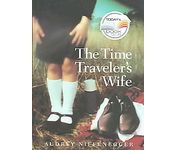
The Time Traveller’s Wife

Yesterday I finished reading The Time Traveller’s Wife, by Audrey Niffenegger. (Not an easily remembered name for an author!) It has a great idea, but it’s way too long: 518 pages. I was skimming increasingly by the last hundred pages, and in fact, had had enough by about 200 pages. Not that she’s ever dull. I just think the story would have been just as good at half the length. A lot of it isn’t plot, but an increasingly long biography of the main character, and his wife. Which is fine, but it’s too long. Did I say it was too long?

There’s an awful lot of sex, some of it described in detail, and okay, the story centres on a very intense relationship, but enough is enough already! It was a bit like my friend Sanchona’s novel, A Family of Strangers: I just couldn’t take any more of the raping and giving of the women’s bodies to men who seemed to have no self-control whatsoever. Only got through about 100 pages of that, and had had more than enough.
The problem with The TTW is that once we’ve accepted the curious idea that Henry has a chrono-displacement disorder, meaning he can suddenly vanish out of the present into either the past or the future (mostly the former), there isn’t much that happens. He can meet up with himself in the past, talk to himself, be himself at different ages and so on. And more curiously he meets up frequently with his wife to be when she’s much younger: she’s eight years younger than him, but sometimes he’s twenty or more years older than her, sometimes he’s a similar age. And along with all this time travelling we have the ongoing story of the present, which is seen through the wife’s eyes. She isn’t a TT of course. The plot is rather minimal beyond that: what really happens one morning when the wife’s family go out hunting? Did they shoot someone? In a sense we’re pretty much aware of what did happen a good way into the book, but it’s only clarified towards the end. And we have to keep checking on the dates in the book (they’re listed at the top of each short section) and see whether we’re ahead, or behind, or in the future, and how old Henry is at any particular time. It’s a nice conceit, but 500 pages of it palls.

I read some of the opinions on Epinions - some of the writers loved it, but some criticise it strongly for its sci-fi inconsistencies. They weren't things I particularly noticed, nor did I feel it was overwhelmingly drear, as one reviewer did, who pointed out all the horrible things that happen to the people in it, especially the women: madness, decapitation, five or six miscarriages to the TT's wife, and the loss of the main character's feet through frostbite. Was that really necessary?

Nevertheless, the writing is very stylish, full of lots of love for things, food, (sex), art, books, music, and relationships, and the characters are mostly well drawn. But if only it had been 300 pages, how much more intense it all would have been!
PS I see on Amazon.com there's an audio version of this book.....unabridged!

Wednesday, November 29, 2006

MBA here I come!

One of these days I’m going to sign myself up for an online learning course of some sort. Never having been to university, it’s something that’s always interested me, and an online (or distance learning) approach appeals. I wonder whether I’d be able to cope with the course, whether I’d have the nous to do the work, whether I can think as well as I sometimes think I can (or better than my wife sometimes thinks I can!).

I was checking out an MBA online course run by Capella University recently and went through the course demo…almost signed up on the spot. Pity it’s in another country! It’s a very clearly laid out demo, moves efficiently without hitches, and gives you good examples of what it’s talking about. Gee, how much have I got in my cheque book and do I have the time….? (Runs off to check out his bank balance…)
I have too much time on my hands. While looking for some information on Google about possible new inventions that can provide electricity on a micro-level (like a little windmill out in the back garden) I came across a site listing US Patents. The following computer mouse seems a bit of an odd invention: what the heck size would the paper be? And what small thing could you print on it? Or is the inventor envisaging a large mouse....kinda like supermouse?
United States Patent 6650315

Abstract:
A mouse device for use as an input device of a computer is provided that includes a housing in which recording paper is loadable, and a printer unit provided within the housing for printing on the recording paper print information received from the computer. The printer unit includes a paper loading section in which the recording paper is loaded, a platen roller for feeding the recording paper loaded in the loading section, a print head for printing on the recording paper fed by the platen roller, and a discharge port through which the recording paper is discharged after printing by the platen roller out of the housing while taking a substantially vertical attitude.
I'm not sure I even understand what he's talking about.

Stokely Carmichael


Stokely Carmichael arguing the thesis that the world is now divided between exploiting white men and exploited coloured people: "What about Castro?" asked one member of his audience, "What about Che Guevera?"

"I don't," retorted Mr Carmichael, "consider them white."

Reported in The Daily Telegraph, 20th July, 1067

Benigno Aquino


It's been some time since I added quotes to the posts on this blog - something I intended to do originally. So here goes again!


There were times when my desperation was so deep that I believed no life is worth a lie, things are either right or wrong and life is worth living only if one acts with some consistency. To submit, to yield, and to surrender to the forces of depression is to give ourselves over to despair: but to act, to resist, no matter how puny the resistance, still preserves for us the hope that we will stand erect.


Benigno Aquino – in a letter quoted by Alistair Cooke. (Found in The New Zealand Listener, 1st Oct, 19383.)

How about men wearing engagement rings?

One of the things that always used to intrigue me when I’d go to the bank to deposit some money was the number of rings the older tellers would be wearing: engagement ring, wedding ring, and possibly a couple of others. What would they be for? An anniversary? A memory of some occasion? I used to wonder how some of them could bend their ring fingers, they were so laden with jewellery. Was there some kind of competition going on to see which teller could outdo the others?

Men, on the other hand, are ostentatious enough if they only wear a single wedding band. And while some of these have become a bit more stylish with the years, you never see a man’s wedding ring with a stone in it – at least not a stone that you’d notice.

One tradesman friend, who seldom wore his wedding ring (he did have one), said the reason was that it was easy to catch the ring on things while working. A friend of his had had his finger nearly torn off when the ring caught on something stronger than he was.

I don’t think I’ve ever seen a man wearing an engagement ring, though it’s an interesting idea, and I’m sure some enterprising company will eventually try and start a trend in this – if they haven’t already done so. Still, if a guy can catch his wedding ring on something like a hook at work, imagine how easily he’d catch a rather more ostentatious engagement ring!

This thought came to me when I was looking at some matching engagement and wedding rings on Danforth Diamond’s site. The engagement rings are obviously the more showy, but the wedding rings have their own special style

Stands in a suitcase

One of the things that used to be a pain when I worked in the bookshop was dealing with old style bookstands. Of course, money to pay for new stands was another issue too! And as for taking books out on the road to a book display: that meant carting all sorts of things with us, and hoping that the church or institution would have enough tables, would put us in a place where we’d actually be visible and so on.

In the light of this I see that the bookstands one company provides for trade show displays are marvellously original, ranging from collapsible stands in a concertina style that fold away in their own handy case to ones that fold up like a pack of cards. Others have a nice lean to the like someone standing back to admire a painting, or shoot up in a triangular shape like someone giving a shout at a football game.

This company, ExhibitDEAL, doesn’t only provide bookstands, of course – it has the whole range of materials for setting up at trade shows, from booths, to floors, to pop-up displays. Very eye catching!

Silver and Gold I have none!

I was with some friends the other night and one couple who’d been in Amsterdam a few years ago were telling me about a bank there. Apparently this bank has a good deal of gold bullion stored in its basement, and they have an excellent approach to preventing the gold being stolen. When the alarm goes off to tell them that someone is trying to filch the gold, floodgates from the canal near which the bank is built open up and….flood the basement. Any thief is promptly drowned (unless he’s a good swimmer) and the gold, which is known to float too well at the best of times, stays exactly where it was. A little hard on the thieves maybe, but then did I hear anyone say theft was something they approved of?

I was reminded about this story when I came across a firm, Monex Deposit Company, advertising silver as an investment. I hadn’t realised silver came in ingots as well as coins – but then silver hasn’t been something I’m known for giving much thought to. I didn’t realise that there is more demand for silver now than ever; in fact, the demand is outstripping the supply….which means, of course, that anyone investing in silver will do very well. Silver, like gold, doesn’t lose its value. Maybe I should store a few bars here at home. The only problem is, living on a hill, I don’t have a canal running alongside the house…

Being an Introvert is OKAY!

I get emails from Jurgen Wolff's Time to Write blog, and yesterday he sent a short piece about Introverts.

I wouldn't consider myself an Introvert, by any means, since I like people, and enjoy having my family around. I'm not a great party-goer, but I've been to plenty of social occasions I enjoy.

The point about Introverts is that unlike Extroverts, they need time to recoup their energy. There comes a point when we have to say to the family (which can be up to ten adults and six grandchildren), "Please go home." Basically, my wife (who's much the same as me in this regard) and I have had enough. We've run out of energy to be social any more, and need space to recoup. Give us a few hours and we'll be back into it again. I go to my computer and do some writing or other work; my wife has a rest - often, in fact, a sleep - or sits and blobs in front of the telly.

According to Jonathan Rauch, in the article that Jurgen Wolff quotes, there's nothing wrong with this - it's a normal kind of behaviour for Introverts.

Both my wife and I feel as though we're normal humans again!

Tuesday, November 28, 2006

Surveys

I wish people who make up research questions would come up with some better ways of defining how you answer. I don't find the boxes they want to fit you into at all satisfactory, and I can't see how they give accuracy to the overall survey. No wonder they talk about error factors of up to 5% - I'd rank it considerably higher in fact!

I laughed out loud a couple of times at a survey I did on the phone tonight. Twaddle about whether a certain cereal made me feel good about my day. Only someone who worked in an advertising agency could possibly answer that with sincerity.

But it's the questions that have to be answered with a choice somewhere between strongly disagree and strongly agree that niggle me. Sometimes that kind of answer just doesn't fit the question. Yet surveyers time and again use it as an answering approach; plainly someone got hold of it once when it actually suited the questions it was applied to, and they've all been on the bandwagon ever since!

Car insurance online

Because, being out of work at present, I’ve been applying for a lot of jobs lately, I’ve had to make mention of the fact that I once worked for State Insurance – back in the days when computers in offices were unheard of. How things have changed. Now you can ring my old insurance company and get insured on the phone. My old bosses would be turning in their graves, I suspect.

Even better is the idea of being able to go online and compare insurance companies. We’ve been able to do it here with banks and mortgages for some time, but I’m not aware that it’s possible in NZ to compare insurance companies with any ease as yet. In the States, however, there’s a crowd called CarInsurance.com who do a car insurance comparison for you. That would be convenient. When I last insured my car I changed insurers, and while it wasn’t hard to do over the phone, I certainly wasn’t able to compare their prices easily either with my previous insurers, or with any others on the market. This idea from CarInsurance.com sounds great, because you can actually receive quotes from many insurance companies – and with the number of insurance companies there must be in the States, this can only be a good thing!

Along with this comparison business there’s an another idea a car insurance company has come up with. Because HD DVD discs have about six times the capacity of the current DVD format, Progressive Direct, a unit of a U.S. auto insurer, has teamed up with Universal Studios Home Entertainment to do something on the HD DVD version of The Fast and the Furious: Tokyo Drift that sounds rather fun. You can choose to have a running tally of the vehicle destruction – in insurance cost terms. As the cars smack into one another in Tokyo, a display in a small window keeps track: "Roof repair: $209, taillights: $451, fender: $618.' The calculator is labelled Progressive Direct: Insurance Damage Estimates.

I’m not entirely sure what use you could make of it, except as one of those kind of I’m kind of curious about that sort of things. And whether most people who watch this kind movie would be interested in the cost of what’s happening as opposed to the mayhem, I’m not sure!

Apparently there are plans for incorporating all manner of extras of this kind into the new format DVDs. We wait with bated breath!

Saturday, November 25, 2006

Well, now it's blogs about blogs. Or rather, blogs about blogs have been on the increase for some time, and are a bit like people eating their own skin. To put it less vividly, they're the same as writers' magazines, where the topic is writing: by writers, for writers, a kind of catch 22 situation. Or am I just being over the top on this?

At least with other magazines, they're mostly about something else besides themselves: sports magazines are written by sports writers, mostly, rather than by sportsmen. Business magazines are written by business writers, rather than businessmen, or women. But writers' mags are written by writers for writers, like looking in the mirror and telling yourself how beautiful you are.

I must admit that when I first began to write seriously, by which I mean when I began to write with the aim of getting published, I devoured every writers' magazine and book I could find. "Devoured" may be more apt than you think, in view of what I've said above.

So would I write a blog about blogs? Only if they were interesting. What's happening however, is that people are writing blogs about how to write blogs. Surely part of the pleasure of a blog is that you don't have to be told how to write: you can write the way you always do - for better or worse. (If it's for worse, people will quickly switch off. There's nothing worse than a badly written blog; or one in which you wonder why the person is writing at all when their command of the language is almost nil.)

This is a bit of a ramble: it's late at night; I've been on the computer for quite some time composing music, and I need to go to bed...

Maybe I'll think more clearly tomorrow!

Tuesday, October 31, 2006

Elizabethtown

I’d heard Elizabethtown was a bit quirky, but thought it might still be worth watching. It wasn’t. It was far more than quirky – it was off its tree several times. Early in the piece the characters, especially those from Kentucky, came across as fun and eccentric, but then the thing lost its way almost completely and decided it was a late starter in the road movie stakes and spent the last ten minutes with Orlando Bloom on the road, driving and visiting a number of tourist sites. Very odd. Bloom had been going to kill himself early in the piece after having cost his company a billion dollar sale (!) but didn’t because he was interrupted by his annoying little cell phone. His intention to go to his father’s funeral and then come back and kill himself was mostly forgotten about for at least an hour until it suddenly was used as an excuse for why Bloom couldn’t fall in love with Kirsten Dunst (who was definitely eccentric, even though she was an airline hostess – of an airline that plainly wasn’t doing very well, flying a jet with only one passenger). The minor characters were fun, but the film couldn’t make up its mind what it was doing: why on earth was Susan Sarandon given a tap dance to do when plainly she had no talent in this direction? How did Bloom and Dunst manage to talk all night on cellphones without having to recharge the batteries (in one shot the phone is connected to a socket, but only once); why did they keep avoiding falling in love with each other? What happened to ‘Ben’ the supposed excuse for Dunst not being able to fall in love? How did she manage to write an entire road book with CDs attached that would cover a 42 hour road trip – in the day or so between Bloom deciding he was definitely going home and then going? The thing started with a real sense of style, then got stuck into the ‘funny backwoods’ people thing in Kentucky, introduced us to a whole host of characters, most of whom didn’t actually do anything in the story (including the one who supposedly has so upset Bloom’s mother) and then gets waylaid by an odd love story that has no suspense whatsoever.

Roger Ebert tells us that the original movie was another twenty minutes longer – and never seemed to know when to end. A good deal of it related to the road trip at the end (which must have seemed mind-boggling) and an epilogue where the shoe that missed becomes the shoe that hits. A relief that this is all gone, I’d say. Berardinelli rightly says that the cut down version still doesn’t address the film’s flaws, and I’d greatly agree. It’s a matter of structure. The love-story is waffly, the point of the film is waffly (is it about getting back to your roots, or forgiving your father, or what?)


I have to link to the superbly cutting review by Peter Bradshaw in The Guardian. He puts it so much better than I can, and far more succinctly.

Monday, October 30, 2006

Punishment fitting the crimes

Brent Todd arranges for a friend to meet with a cocaine dealer and, when he finally has to face the court, is given a fine of $500. That’s about what I’d pay for electricity over a couple of months.

Ngati Reweti, takes a piece of concrete up on an overhead bridge with the intention of dropping it on the cars below, and kills a young man. Not only is his sentence reduced by the judge from what was first considered, it’s then found that he’ll probably be out of jail by Christmas because (1) he’s already served 14 months, and (2) because of the parole system.

I could no doubt scour the newspapers for other examples of nonsensical justice, but these two will do. They’re all well known.

I’m not the sort of person who naturally demands an eye for an eye, though in my first reactions to crime, especially vicious crime, that’s often how I feel. Why should someone live years in prison when a life has been taken? But I always realise that justice of that kind doesn’t serve much purpose in the end. Killing a murderer is an easy way out.

I’d believe in restorative justice much more if I saw enough evidence of it, but although it’s talked about a lot, I suspect that the increasing prison populations tell me it isn’t working very well as yet.

So while out walking yesterday the old song by W S Gilbert came to mind, the one from The Mikado about letting the punishment fit the crime. Throwing people in prison very plainly doesn’t work: most criminals come out of jail worse than they went in.

My ‘fitting punishments’ aren’t perhaps the most imaginative, and perhaps they don’t need to be as clever as Gilbert’s were, but supposing, instead of Ngati Reweti, being put in jail, he was chained to a lump of concrete roughly equivalent to the one that killed an innocent man, chained in such a way that night and day he couldn’t get free of the thing. He’d have to carry it to school, or drag it; he’d have to go to bed at night with it still attached to him; he’d have to go out with his mates and suffer their ongoing mockery. Perhaps he could be attached to this for the same number of years his victim had been on earth. Maybe the same number of months would be enough. But at least we might start to see some remorse from him. So far there doesn’t seem to have been any.

Brent Todd – how might he be punished? There are plenty of options. Instead of receiving his celebrity fees on television, all his earnings could go to Drug Rehabilitation Clinics. Maybe that wouldn’t be quite strong enough. Perhaps he should go and work in a Drug Rehab Clinic for some long time – 500 days sounds like a good minimum. Maybe he could be made to live with someone trying to overcome their addiction. Maybe the walls of his fancy home could be plastered with the names and photographs of the thousands of people who’ve suffered from drugs in this country – the pictures of those who’ve killed themselves because of addiction might be blown up to full size.

As long as we treat the victims of criminals as unimportant, as has been the case in both of these instances, people like Todd and Reweti, will consider that they got off lightly, and will carry on doing stupid and remorseless acts. If they were made to face some deterrent aspect of their crime in a full-on fashion, perhaps we’d reach their hearts, their souls, and find out whether they really were human or not.

An hour before meals

Why do doctors insist on prescribing tablets that have to be taken an hour before meals?

Do they think we all live in a controlled world where everyone always eats their meals at the same specific time each day? Or that suddenly, because we have these tablets to consume, we will order our lives in order to fit around said consumption.

The hardest part, of course, is trying to remember to take the things an hour before meals, breakfast being the worst. Do the doctors really expect us to wake an hour before breakfast just to down a tablet or two? And what happens when you have to take four of these things a day? Are you supposed to fit in an extra meal?

Friday, October 13, 2006

More on the dance

More from Michael Mayne's Learning to Dance. This time from the chapter entitled May. I just read a kid's book on the way home from town: Fibonacci's Cows, by Ray Galvin, published in NZ. Gives a very good explanation of what Fibonacci did.

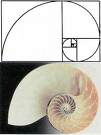
We live in a world of patterns. Nightly the stars move in a circle round the sky; the perfectly shaped spiral of nautilus shell echoes the spiral of the curling, breaking wave; the patterns in the desert sand point to the laws governing the flow of sand and air. Once again we are in the world of mathematics, the way we recognise and classify the patterns that lie all about us. And nothing is more intriguing than the mathematical equations that link leaf and flower patterns with the exact proportions the Greeks used in their architecture.

Leonardo Fibonacci was born in Pisa in about 1170. When he was twenty he went to Algeria, where he learned Arabic methods of calculation. He wrote on number theory and recreational mathematics. His most famous discovery was what is known as the ‘Fibonacci sequence’, in which each number is the sum of the two previous ones: hence 1, 2, 3, 5, 8, 13, 21, 34, 55, 89, 144….and these turn out to be the numbers that dominate the natural world. The number of petals on most plants is a Fibonacci number: for example, 3 petals on lilies and iris, 5 on buttercups and the wild rose, 8 on delphiniums, 13 on ragwort and corn marigold, 21 on asters, 34, 55, or 89 on most members of the daisy family.
More strikingly, the Fibonacci sequence is found in the spiralling seed-heads of sunflowers, where the clockwise spirals 55, 89 or 144; on the diamond-shaped scales of pineapples, with 8 rose sloping to the left, 13 to the right; and on the spirally base of pine cones, or the spiralling florets of a cauliflower. If genetics can give a sunflower any number of seeds it likes, a daisy any number of petals, or a pine cone any number of scales, why is there such a dominance of Fibonacci numbers? The answer almost lies with the dynamics of plant growth.

Now go one stage further: take the ratio of two successive Fibonacci numbers, starting with 5, and divide each by the number before it: 5/3 = 1.666, 8/5 = 1.6, 13/8 = 1/625, 21/13 = 1/61538. The ratio settles down to a particular value, 1/618, and this is known as the Golden Number or the Golden Mean, the ideal proportion used by the ancient Greeks in building: an oblong with the proportion 1 to 1.618 found to be particularly pleasing to the human eye.
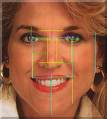
At the time of the Renaissance this proportion was seen to be the secret of what we find beautiful in the human face and body: in a well-proportioned body 1/1618 is the ratio from the top of the head to the navel, and from the navel to the ground, as it is of the finger (measuring the length of the knuckle to the end of the first joint against that of the middle joint) or that of the middle joint against the finger tip; as it is also if you measure the width of the mouth against that of the nose, or the width of the incisor against that of the adjoining tooth.

There is in mathematics what is known as the Logarithmic Spiral: if you draw within an oblong with these proportions further and ever-smaller oblongs, in which the shorter and longer sides are in this same 1/1.618 proportion, and then join the corners, the resulting spiral exactly matches that which is everywhere in nature: in the shell of the hermit crab, in the ammonite, the ram’s horn, the breaking wave.

It doesn’t stop there: 90 per cent of plants show the Fibonacci numbers in the arrangement of the leaves around their stems; and in the bee colony the number of female workers to male drones will be around the golden number of 1/1.618.

Learning to Dance

One of two passages I want to quote from Michael Mayne's Learning to Dance. This is from the chapter entitled June: The Dance of DNA. One of Mayne's other books, This Sunrise of Wonder, has been a book I've gone back to at least twice, and it's still a great book to dip into. Learning to Dance is proving to be just as good.

I've altered the paragraphing to make it more readable on here.

In mid-December 1928, my mother became pregnant. Here again the combination of law and chance took effect: the law dictates that male sperm fertilise female eggs, while chance allows just one sperm (out of 300 million or more) finally to each and invade the ovum, some 85,000 times its own size. Around each one of us hover the shades of a million other lives that were not destined to be born. By early January a distinct tube-like structure had been formed in my mother’s womb: it would become my heart, and it was already beating. By early February the early forms of all my internal organs were present, though the embryo that was potentially me was only a little more than an inch long and weighed less than one-fifth of an ounce.

Already my genetic make-up had been determined. The genome (that sequence of genes which carries instructions for the manufacture of proteins) was directing the two hundred or more types of cells of which we are composed to their various ultimate locations in order to generate the necessary systems (skeletal, muscular, circulatory, reproductive, digestive, urinary, respiratory): to my lymphatic system which would fight disease; to my immune system whose role would be to distinguish friend and foe, what belonged to my body and what did not; and to my autonomic nervous system, that widespread web of nerve-cells, circuitry and chemicals with the task of preserving within my body both equilibrium and constancy.

In a few more days tiny arms and legs could have been seen, the hands and feet still paddle-like, with web-like bits between the fingers and toes, and faintly detectable ears and eye sockets. ("In the absence of any other proof," said Sir Isaac Newton, "the thumb alone would convince me God’s existence.")

My central nervous system and muscles had formed sufficiently to respond to gentle stimuli. Ever movement and change was now being choreographed by the genetic code, various cell groups uniting to

‘migrate, twist, turn, glide, fold, bend, lengthen, branch, fuse, split, thicken, thin, dilate, constrict, hollow out, form pockets, pinch off, adhere, separate….Hundreds of millions of dancers appear and they all participate, forming themselves into the shapes of various tissues and organs.’ [Sherwin Nuland in How We Live]

I had become a foetus, and it was all systems go.

By the middle of March my head was still enormous in comparison with my body. Fingernails and eyelids had formed, plus lips and an enormous nose. My ribs and vertebrae had become cartilage. By the middle of April my body was catching up with my head: I was some nine inches long and my mother could begin to feel me kicking. By the end of May, with an ear to the womb you could have heard my heartbeat, and I was beginning to show signs of an individual personality, establishing patterns of sleep and wakefulness. I was even growing eyelashes.

By Midsummer Day my eyes were complete and I could both hear and cry. Finally, on 10 September I was born. And already there was enough information capacity in every single cell in my body to fill some dozen copies of the Encyclopaedia Britannica.

Friday, October 06, 2006

Chick flicks and Dogville

Celia and I went to see the much-heralded (by other people) Mrs Palfrey at the Claremont, the other night. A load of old sentimental cobblers, and even Celia said it was a 'chick flick.' It was enjoyable, but improbable, relying almost entirely on the central performance by Joan Plowright, who does 'old' very well - possibly because she now is old. The relationship between her and the young man who takes on the role of her interim grandson isn't a difficulty, but it's always sweet and light; there's no difficulties in it. And everybody, even the nasty people, fall in love with Mrs Palfrey - though it seems she'd prefer they didn't, as she wants some privacy, and to just be herself, not someone's wife, or mother, or daughter. The young man, Rupert Friend, has the unenviable task of being nice all the time. He manages it okay, but it's not very interesting, and there are some scenes where you think: he's going to have to break out of this or go crazy!

It would be nice to go to something that required the brain to do a bit of work - not that I want to sit through something like Dogville every week - but something that isn't about just straightforward people being nice to each other. Isn't it absurd, that the most enjoyable dramas are ones in which people aren't being nice to each other? The Varsity has just presented Hecuba at the Mary Hopewell Theatre this week: by all accounts as gloomy and miserable a piece as you'd want to see. Yet I bet the 17 people who attended went home thinking they'd caught up with something that was worth their while getting out to.

Tuesday, October 03, 2006

The World Premieres of Some of My Music

For the record, here's the review that appeared in the ODT of my concert, held on Saturday, the 30th Sept, 2006. It was written by Elizabeth Bouman.

A large audience in Marama Hall on Saturday evening enjoyed a programme of original works by Mike Crowl, whom many Dunedin people know as the quietly spoken man who operated a book shop in the Octagon.

Music fraternity have known of his involvement with Opera Alive, and as accompanist at vocal competitions with singers from 8-year-olds to ODT Aria contestants, but few knew of the ‘composer within’ until Saturday’s recital entitled The World Premieres of Some of My Music.

Crowl’s style in setting New Zealand poetry is delightfully contemporary without venturing into the extreme. It is witty, poignant and very singable, often ending with a whimsical touch.

Performing were Arnold Bachop, Rose Evans, Cally Hammond-Tooke, Benjamin Kidd, Glenys Murray, Brent Read, Helen Scott and Justin Scott, and pianist Richard Warnock.

The songs were mostly written for a particular singer or vocal teacher, and the fifteen performed varied in text, all with interesting stories as to how they evolved. Several set Ruth Dallas’ poems, and a group of five children’s songs included Eel-fishing, The Rooster and [The] Elephant, by J K Baxter. Response (Ursula Bethnell) [sic] was dialogue from an immigrant writing home about opposing seasons in the garden. Sabbath, Winter Warning, Church Sunday and Ecstasy, longer, more complex works with colourful varied accompaniment, were written for Brent Read, who travelled from Auckland to perform.

Piano Pieces for Kobi Bosshard were five impressive piano pieces, each inspired by a picture. The recital concluded with a captivating piano duet written to accompany (projected on screen) pages of a much loved children’s book, The Fence.

Crowl’s work is available for purchase, and may there be many future publications from this local musician.

I no longer work in a book shop, which hasn't been in the Octagon for two years - but reviewers can't be expected to keep up with everything. Ursula Bethell has no letter 'n' in it, either. Opera Alive was a group of young singers, 15 to 29 in age, who for perhaps ten years presented an annual concert/show. 20 to 25 singers would be involved, and it was a great learning ground for these people. I was involved for around seven years. Kobi Bosshard and his wife, Patricia, were neighbours of ours in the late seventies, and at that time Kobi was learning the piano. Unfortunately the pieces I wrote were just a little on the difficult side for someone still learning (!)

Monday, October 02, 2006

Wild Bean Coffee

Liz came and brought me a Wild Bean coffee - it was nice to see her and talk about things, but Wild Bean proved to be exactly what I thought: false advertising. If anyone viewed it as some kind of real coffee, I'd eat my hat. It has all the excitement of coffee that's poured out of a machine: in other words it's coffee for people whose taste buds have gone down the tubes. Which doesn't say much for that chap in the ad who gives up a good-looking girlfriend for a cup of Wild Bean, or wakes with horror from a delicious dream of a luscious lady offering him a morning coffee because it isn't Wild Bean. The guy needs his head read!

It's noteworthy that BP writes about their Wild Bean outlets: "Customers do not expect to find high quality café outlets in a Petrol Station." That's right, they don't. Could anyone expect to find decent coffee at a petrol station, where, these days, they often can't even be bothered to come out and pour your petrol for you...

Sunday, October 01, 2006

Other people's books

I once visited...Anthony Powell, who actually wrote a novel called Books Do Furnish a Room. Indeed, they did so in his case. He lived deep in the English countryside, in Somerset, in an old stone manor on many green acres. We had tea in his sitting room, which had floor-to-ceiling shelves on every wall. There were first editions by his good friend Evelyn Waugh, and countless volumes culled from his decades as a reviewer. "I can't give a book up, if it's a book that meant something to me," he said. "I always imagine I'll go back to it one day. I rarely do, but the intention is there, and I get a warm feeling among my books." I wished I could have spent days wandering in that house, as he had books in nearly every room.

From an article by Jay Parini entitled: Other People's Books.

I have given up a number of books that I thought I never would, because I was sure I'd read them one day, but I understand Powell's feeling. Having read a book you have a link with it that won't go away - even the awful books that you know were badly written and which you only read because you had to review them or because someone else thought they were wonderful. And so you keep them, thinking that one day you'll need to look something up in them, or check the title, or make a note to read something else by the same author.

I have a great deal of trouble not buying copies of many of the books I borrow from the library. Having established the link with them, I want them to stay close at hand, not be on the shelves at the library where someone else might take them out just when I need them.

Thursday, September 28, 2006

Some notes about Gibson's The Passion


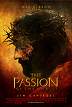
Some notes I made about Gibson's The Passion of the Christ, that I made when I first saw it.

I enjoyed the way it was made, the superb photography, the excellent direction, the amazing cast of unknown faces - most of them continental rather than US in origin - the curiosity of having them speak in the original languages (it's not often you hear Latin spoke!), some of the individual scenes - the healing of Malchus' ear is one that is really affecting.

I didn't enjoy the excess of the lashings, which go on and on and on, until they blunt your sense of horror at what's happening, and you want to say - Enough...this is a movie, not a reality.
Equally the journey up the hill to Golgotha goes on and on and on... and has the same effect on the audience. People have said Gibson, as a Catholic, has based this on the 14 stations of the cross - I didn't think it was quite as pointed as that, but it's a long time since I went round the stations.

I found it odd as to what was left out: John has his feet washed but not Peter, who was surely a more dramatic actor in that incident. Judas' suicide is given prolonged treatment, but who he is and why he's doing this isn't explained. People coming to this movie who are unfamiliar with the Jesus story will be quite puzzled by some of what goes on....there's no back story to a lot of it, and the flash backs we do get are rather random. Even the resurrection looks like another flashback until you notice, if you do, the nail hole in his hand.

I 'enjoyed' it more than I thought I would, but mostly from an aesthetic side. It moved me in places, but more in small ways than large. Jesus' suffering became over the top because one of the lessons of drama, as Gibson ought to know, that less is more. As for it being violent; well, Gibson himself has appeared in movies that are just as violent as this. The only difference is that they aren't about a revered figure....

Muyk Quhroughl

A friend suggested I might spell my name:
Muyk Quhroughl.

I was impressed: it gives hints of my Irish forebears, and the first name may have some connections with the Jews in my past.

On further reflection she added:

Sometimes you could spell it 'Majic', pronounced'Mah-yeek'. Majic Quhroughl, the Slavic Irishman.

I didn't think I could call up any Slavic ancestors, but she said:

It's a public-relations tour de force. People notice it and they boggle. [As opposed to bloggle]. They say to you, 'MAGIC? How can you have a name like MAGIC??" and you reply, with a faint superior smile, 'It isn't Magic, silly. It's Mah-yeek. Short for MghCaejl. Old traditional Irish family name, handed down from my greatgreatgreatgrandfather, the Chieftain.'
Then they say, 'Huh! Nobody's THAT great,' and you murmur modestly, 'HE was. . . .'
And they'll be so impressed they'll never forget you, and the next time they want a book reviewed, they'll send it to you. (That solves the problem of having no Slavic ancestors)

Friday, September 15, 2006

Neil Gaiman

I can believe things that are true and I can believe things that aren’t true and I can believe things where nobody know if they’re true or not. I can believe in Santa Claus and the Easter Bunny and Marilyn Monroe and the Beatles and Elvis and Mister Ed. Listen – I believe that people are perfectible, that knowledge is infinite, that the world is run by secret banking cartels and is visited by aliens on a regular basis, nice ones that look like wrinkledy lemurs and bad ones who mutilate cattle and want our water and our women. I believe that the future sucks and I believe that the future rocks and I believe that one day White Buffalo woman is going to come back and kick everyone’s ass. I believe that all men are just over-grown boys with deep problems communicating and that the decline in good sex in America is coincident with the decline in Drive-In Movie theatres from state to state. I believe that all politicians are unprincipled crooks and I still believe that they are better than the alternative. I believe that California is going to sink into the sea when the big one comes, while Florida is going to dissolve into madness and alligators and toxic waste. I believe that anti-bacterial soap is destroying our resistance to dirt and disease so that one day we’ll all be wiped out by the common cold like the Martians in War of the Worlds. I believe that the greatest poets of the last century were Edith Sitwell and Don Marquis, that jade is dried dragon sperm, and that thousands of years ago in a former life I was a one-armed Siberian Shaman. I believe that Mankind’s destiny lies in the stars. I believe that candy really did taste better when I was a kid, that it’s aerodynamically impossible for a bumble-bee to fly, that light is a wave and a particle, that there’s a cat in a box somewhere who’s alive and dead at the same time (although if they don’t ever open the box to feed it it’ll eventually just be two different kinds of dead), and that there are stars in the universe billions of years older than the universe itself. I believe in a personal god who cares about me and worries and oversees everything I do. I believe in an impersonal god who set the universe in motion and went off to hang with her girlfriends and doesn’t even know that I’m alive. I believe in an empty and godless universe of causal chaos, background noise and sheer blind luck. I believe that anyone who claims to know what’s going on will lie about the little things too. I believe in absolute honesty and sensible social lies. I believe in a woman’s right to choose, a baby’s right to live, that while all human life is sacred there’s nothing wrong with the death penalty if you can trust the legal system implicitly, and no-one but a moron would ever trust the legal system. I believe that life is a game, life is a cruel joke and that life is what happens when you’re alive and that you might as well lie back and enjoy it.

The female hippy character, Sam, in Neil Gaiman’s American Gods: on a roll, and expressing the confused state of belief that she probably shares with many other American citizens. It’s also an aria for one of the main characters; Gaiman being both real and cynical and joking and hilarious all at the same time; and a marvellous expression of Sam’s smart/naïve/intellectual/simple personality. And a rare moment of warmth and humour in a fairly dark novel.