Showing posts with label time travel. Show all posts

Saturday, October 27, 2007

Being less than perfect tourists

We’re not very good tourists. I’ve come to the conclusion that not only do we get overwhelmed by choice, but even the choices we take up aren’t necessarily the best ones. Part of this is because I’m a bit disinclined to go just for the obvious tourist attractions. For instance I could have quite happily not gone to Pisa in Italy, but in the end we did, and it was interesting, but not surprising. That’s the problem with the obvious choices: we’ve seen them so often in pictures that they’ve lost their ability to surprise.
It’s been the same with choosing which cities to visit on our way around the five countries we’d opted to come to on our Eurail pass. Originally in Germany, we were going to go to the cities on the East side: Berlin and Munich were on our list. And then we discovered problems with getting from one of these places into Switzerland, and my wife found that there was a train that took you past the Rhine for a long distance, and we ended up going for places on the West: Cologne and Heidelberg, both of which I enjoyed, but they hadn’t been our first choices.
As for picking hotels in Germany - or in any of the countries for that matter - it’s been almost a matter of taking a pin and open the telephone book at any page. Except that we’ve done the equivalent on the Internet. This has resulted in some interesting choices, ones that in hindsight we might not have made if we’d known all we know now!
The place we picked in Cologne turned out to be excellent, and very central. The place we picked in Heidelberg was odd to say the least, and I’ve written (probably at length) about it on my travel blog. Whether we’d have made better choices for hotels in Berlin or hotels in Munich is a moot point. There’s a huge range of options on the Net these days, and the unwary or even the wary traveller can find him or herself delving into all sorts of interesting corners!
Still, if we missed Bavaria and the Oktoberfest, we did see plenty of castles on the way. And if we missed the Brandenberg Gates (which to my mind are more significant because of the military and political factors than their visual interest) and the Marienplatz and St Peter’s Church, we certainly made up for it by visiting St Michael’s in Hamburg (even climbing up to the tower - some twenty or more flights of stairs) and the Cathedral in Cologne - which was overwhelming!

Saturday, August 04, 2007

The delights of luggage

One of the delights of travelling is dealing with luggage. We aimed to have as little as possible when we came to England this time, but we still wound up with two heavy suitcases, a laptop and all its connection bits and pieces, my wife’s handbag (which contained her various ‘toys’), my backpack with books in it and my toiletries, and my wife’s backpack with clothes for the voyage. I saw the phrase ‘Not Wanted on Voyage’ as the title of a book the other day; haven’t seen it in a long time. I suppose it doesn’t much get used these days with ships being less popular for travel.
The trip was fine for the most part, as far as the luggage was concerned, because we had our suitcases sent through direct from Auckland to London. But when we got to the UK, and had to start hauling them about again, things were rather different. The worst moment was when we got off the underground at Bank station and had to climb two flights of stairs with the suitcases and all the other paraphernalia.
What we really need is luggage that carries itself. Now that would be ideal!
Incidentally, one of the things my wife wasn’t carrying was her Swiss Army Knife (one of the toys I mentioned before). With all the restrictions these days, it’s not the sort of thing you want to have in your handbag. She nearly lost it three years ago when we went to Australia, and she discovered just as she was about to front up to customs that it was in her handbag. She asked if she could take it out to her daughter for safekeeping until she got back in the country and they wouldn’t let her out of the area again. So there she was, calling loudly across the terminal to my daughter, who was just out of hearing range. Fortunately, in the end her frantic waving caught my daughter’s eye. Otherwise, the beloved SAK would have gone into the pockets of the customs’ people.
I was reminded about this because I just discovered that there’s a range of luggage called Swiss Army. Apparently it’s designed to the same level of excellence as the knives, though hopefully without the deadliness.

Monday, May 14, 2007

Blog Resurrection

I had a birthday yesterday. It's such a boring number that I won't even bother to tell you what it is, but suffice to say, I won't be looking forward to twice 31 again.
As a kind of celebration of the occasion, I've resurrected another blog, one that I started back in the early part of the century, and seem to have let go. Can't quite understand why it was neglected, but that's the way things are.
Anyway, it's going to focus on our imminent trip to the UK, and anything else that happens to relate to that. Expect the usual mix of random comments, paid posts, nonsense, and some stuff about travelling.
It goes by the exciting name of Mike Crowl's Travel Diary, because I was in a hurry to get it up and running again, and didn't have time to think of anything better, such as An Optimist Goes Abroad, or A Broad Optimist Goes, and so on.
I've sometimes wondered, apropos of that, whether I'm an optimistic pessimist, or a pessimistic optimist. Can't quite decide where the difference lies.

Saturday, March 10, 2007

Michael Gurr


Michael Gurr is an Australian playwright

‘Believing your value as a human being is measured by your independence and separation from others is the great lie of the market-driven world.’
From Michael Gurr’s memoir Days Like These, quoted in Time Magazine 6th Nov, 2006

‘On the early trains, slightly damp hair and recently applied make-up give you access to bodies so lately asleep or naked that it can induce a sensation like the swoon of a long kiss.’
Ibid.

In regard to writing his memoir, he discovered his aim was:
‘To put a bit of steel back into the language of ideas that have come to be seen as soft, nebulous, weak. All the things that have been stripped out of the national conversation.’ This follows from an earlier comment about Australian politics: ‘I’ve never been angrier. Our current national government has presided over a time of almost unbelievable moral corruption.’

Thursday, January 25, 2007

L'Engle

It must be a long time since I read Madeleine L’Engle’s A Wrinkle in Time, because I’d forgotten most of it. I’d remembered it with some fondness, but a re-reading in the last few days shows that it starts off a lot better than it finishes. The first two thirds of the book bustles along at a great pace, but somewhere in the last third it loses momentum, and the ending is quite weak. I was reading along, thinking ‘this is going to lead to a great climax’ and then realised there were only half a dozen pages left. Meg’s rescue, on her own, of her precocious little brother, hinges on her being able to love him more than the strength of the darkness can brainwash him, and it’s over in a few sentences. It’s rather like the ending of the first Harry Potter book, where, after an enormous effort to get there, Harry seems to manage to deal with Voldermort in a matter of seconds. (The scriptwriter for the film realised this problem and gave a lot more room to the climax).

Still, L’Engle’s famous book has lots of charm, and, when it was published, was no doubt quite a wind change in the children’s publishing industry. It expected children to cope with long words and interesting concepts, including something that it took the general adult market another decade or more to deal with, in Hawking’s A Brief History of Time.

I don’t know that I ever quite believe in the little brother, Charles Wallace (he’s called by this double-barrelled name throughout for some reason); he’s too perceptive to be true, and considering that his father only knew him as a toddler, and then was away for one or two years, the child can only be three or four. In spite of that, L’Engle gives him wise things and almost-adult things to say, and it’s hard to get a picture of him in your head. In fact, apart from saying that when he sits on a chair his feet dangle six inches from the floor, we’re not given much indication how big or old he is. Which is helpful to L’Engle, but a little annoying to the reader. Precocious children seem to delight some American authors. They’re not very true, and rather indicate that the author hasn’t looked lately at the average three or four-year-old. I have, and they ain’t much like this! Half the time you’re lucky if you can understand what it is they’re trying to get at, and I’m talking about the intelligent ones. In the end you get a picture of Charles Wallace in your head that makes him about seven, and you have to ignore L’Engle’s insistence that he must be a lot younger.

I still like L’Engle as a writer, though she can be annoyingly waffly at times. I read a much later book of hers a couple of years ago. The romance aspect of it was plain awful, in spite of the book as a whole having some very good writing. Think the book was Troubling a Star and it was about a girl going to Antarctica on a boat with a number of rather suspicious people – rather too many suspicious people, but never mind. Her autobiographical books suffer from a bit of waffle too, but there are so many gems amongst the waffle that you can accept the waffle and ignore it.

Friday, December 01, 2006

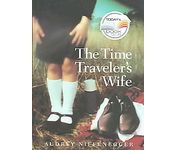
The Time Traveller’s Wife

Yesterday I finished reading The Time Traveller’s Wife, by Audrey Niffenegger. (Not an easily remembered name for an author!) It has a great idea, but it’s way too long: 518 pages. I was skimming increasingly by the last hundred pages, and in fact, had had enough by about 200 pages. Not that she’s ever dull. I just think the story would have been just as good at half the length. A lot of it isn’t plot, but an increasingly long biography of the main character, and his wife. Which is fine, but it’s too long. Did I say it was too long?

There’s an awful lot of sex, some of it described in detail, and okay, the story centres on a very intense relationship, but enough is enough already! It was a bit like my friend Sanchona’s novel, A Family of Strangers: I just couldn’t take any more of the raping and giving of the women’s bodies to men who seemed to have no self-control whatsoever. Only got through about 100 pages of that, and had had more than enough.
The problem with The TTW is that once we’ve accepted the curious idea that Henry has a chrono-displacement disorder, meaning he can suddenly vanish out of the present into either the past or the future (mostly the former), there isn’t much that happens. He can meet up with himself in the past, talk to himself, be himself at different ages and so on. And more curiously he meets up frequently with his wife to be when she’s much younger: she’s eight years younger than him, but sometimes he’s twenty or more years older than her, sometimes he’s a similar age. And along with all this time travelling we have the ongoing story of the present, which is seen through the wife’s eyes. She isn’t a TT of course. The plot is rather minimal beyond that: what really happens one morning when the wife’s family go out hunting? Did they shoot someone? In a sense we’re pretty much aware of what did happen a good way into the book, but it’s only clarified towards the end. And we have to keep checking on the dates in the book (they’re listed at the top of each short section) and see whether we’re ahead, or behind, or in the future, and how old Henry is at any particular time. It’s a nice conceit, but 500 pages of it palls.

I read some of the opinions on Epinions - some of the writers loved it, but some criticise it strongly for its sci-fi inconsistencies. They weren't things I particularly noticed, nor did I feel it was overwhelmingly drear, as one reviewer did, who pointed out all the horrible things that happen to the people in it, especially the women: madness, decapitation, five or six miscarriages to the TT's wife, and the loss of the main character's feet through frostbite. Was that really necessary?

Nevertheless, the writing is very stylish, full of lots of love for things, food, (sex), art, books, music, and relationships, and the characters are mostly well drawn. But if only it had been 300 pages, how much more intense it all would have been!
PS I see on Amazon.com there's an audio version of this book.....unabridged!